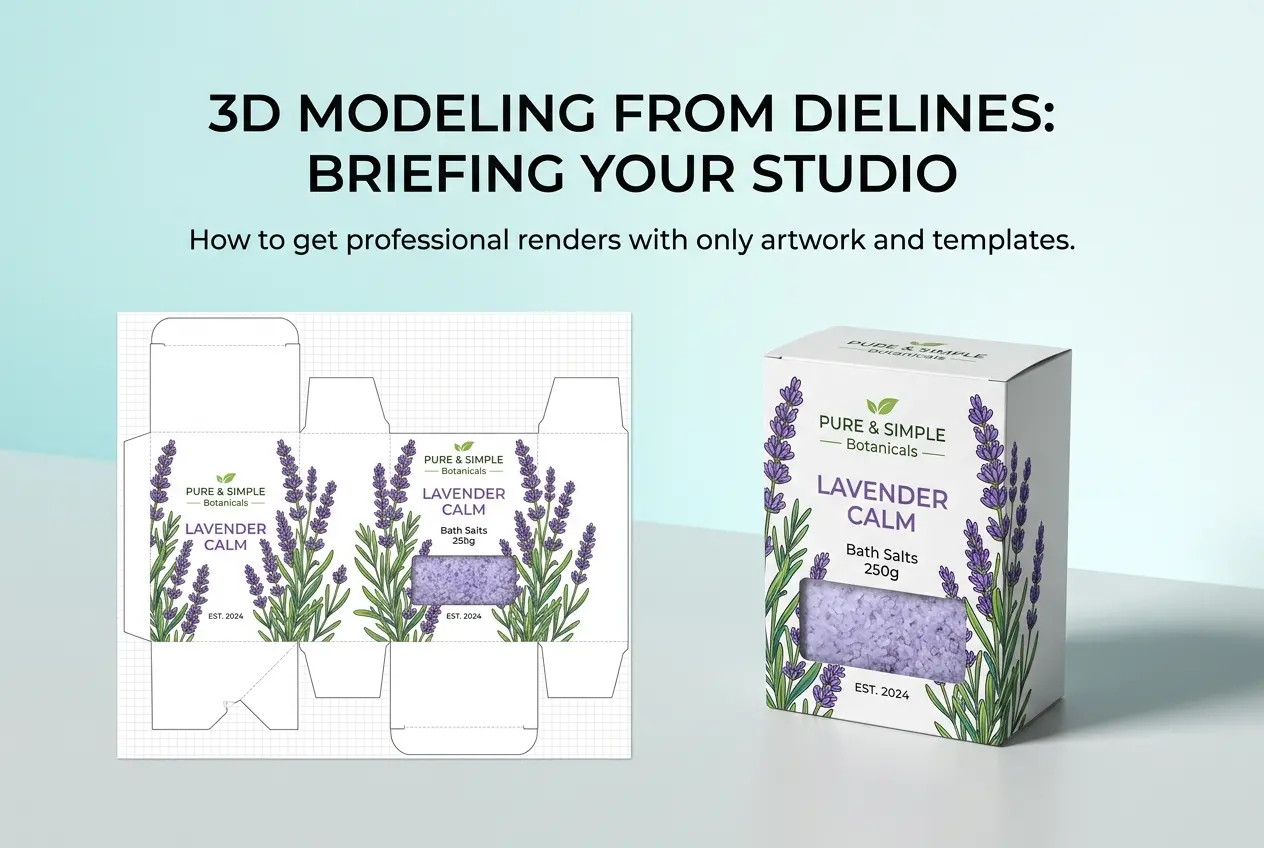
If your team is still waiting on samples, reshooting products after every design tweak, or trying to keep catalog images consistent across channels, the problem usually is not creative talent. It is the workflow. In 2025 and 2026, 3D product modeling in rendering is no longer a niche option for large brands with specialized teams. It has become a practical way to produce better visuals, launch faster, and keep content aligned as products change.
The biggest shift is simple: brands are treating product visuals as reusable digital assets instead of one-time photo shoots. Once a product is modeled properly, that file can support white-background images, close-up detail shots, packaging previews, lifestyle scenes, animations, and interactive spins. That changes how marketing, e-commerce, sales, and product teams work together.
For companies selling online, through distributors, or across multiple marketplaces, this matters because content demands keep growing. You need more views, more variations, more formats, and quicker updates. A strong 3D pipeline gives you control over all of it without rebuilding the visual process every time a label, finish, or feature changes.
Why 3D product modeling in rendering has become a business decision, not just a creative one
Traditional photography still has a place. But it becomes difficult when you need flexibility. If a bottle cap changes shape, a device gets a new finish, or packaging copy is updated late in the launch cycle, a photo-based workflow often means shipping again, staging again, and editing again.
With 3D product modeling in rendering, the core product exists as a digital master asset. Update the label. Swap the material. Change the camera angle. Create a new scene for a retailer. The process becomes more controlled and far easier to repeat. That is why many brands now compare 3d render service vs inhouse rendering which makes more sense for your business before they invest in a long-term content workflow.
This is especially useful for product teams working ahead of manufacturing. If the physical item is still in development, renders can support pre-launch marketing, internal reviews, sales presentations, and retailer approvals. Instead of waiting for the final sample, teams can move earlier and with more confidence.
What brands gain from a reusable digital product asset
A good 3D model is not just an image source. It is a foundation. When built correctly, it can support many kinds of content without starting over each time.
Consistent visuals across channels
One of the most common brand problems is inconsistency. Marketplace images look one way, paid ads look another, and packaging previews feel disconnected from the website. In 3D, lighting setups, camera positions, and material settings can be saved and reused. That creates a more unified look across your entire product line.
Faster reaction to product updates
Products change late. It happens all the time. Packaging text gets revised, accessories are added, compliance details shift, or a color is discontinued. A digital model makes these changes easier to manage. You are not rebuilding the entire production from scratch just because one detail moved.
More content from the same source
Many brands start by requesting simple hero images, then realize they also need comparison graphics, exploded views, retail-ready pack shots, social crops, and short animations. When the model is created with future use in mind, those extra assets become much easier to produce. If your team is new to the workflow, this guide on how to create 3d product renderings 360 render gives a clear picture of how the process typically works.
Where 3D rendering outperforms photography in 2025 and 2026
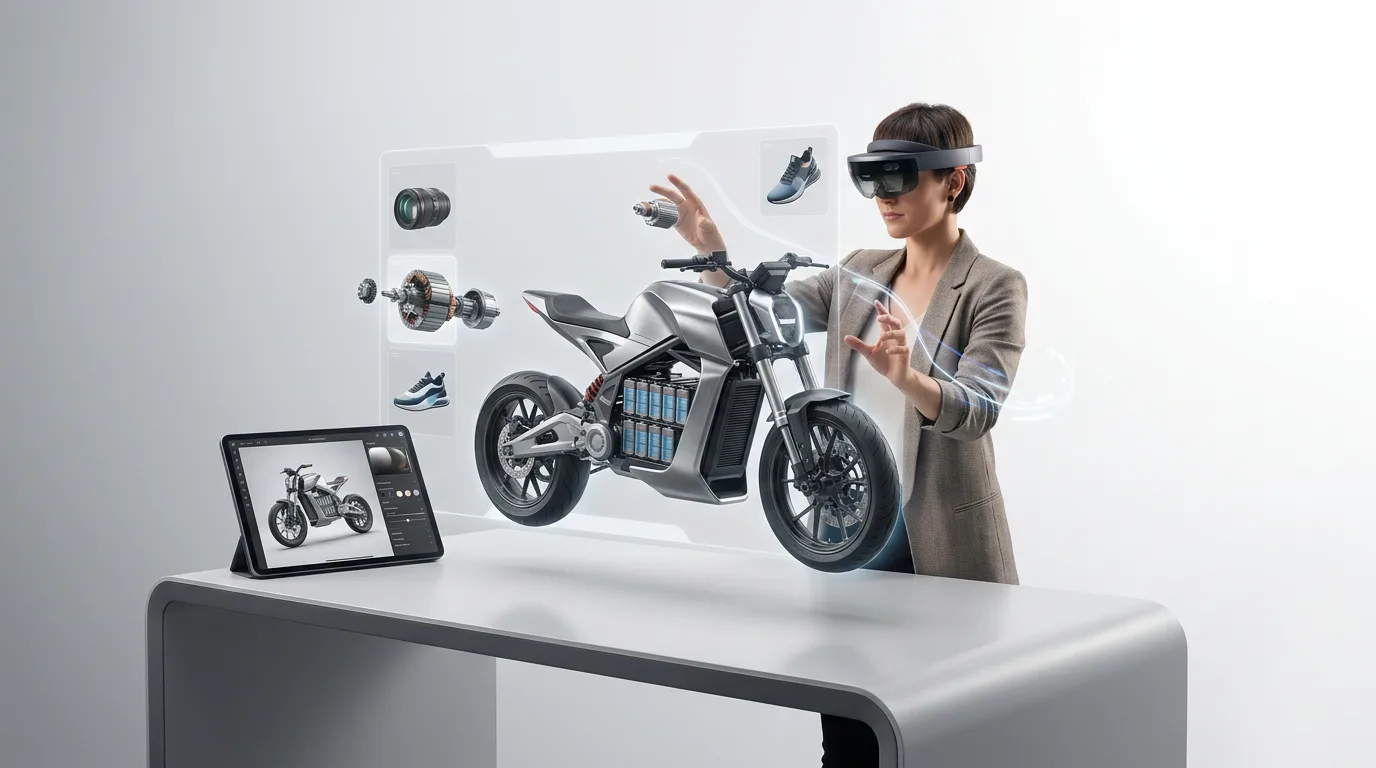
The question is not whether rendering replaces photography in every case. It does not. The better question is where rendering solves problems photography cannot solve efficiently.
For example, imagine a product line with multiple finishes, several sizes, and seasonal packaging. Photographing every combination can become slow and expensive, especially when some versions are not physically available at the same time. Rendering allows those combinations to be produced from the same base model with much tighter visual consistency.
Another advantage is precision. In photography, reflections, glare, and tiny lighting changes can create variation from shot to shot. In rendering, those variables are controlled. That is why many e-commerce teams now review 3d rendering vs photography which is better for product listings in 2025 when deciding how to build product pages that feel polished and trustworthy.
Rendering is also ideal when the camera needs to do something impossible or impractical in a real studio. You can show a product floating, sliced open, isolated in perfect lighting, or placed inside a fully art-directed environment without physical set construction. That opens up far more options for storytelling and technical explanation.
How 3D models support e-commerce, sales, and product education
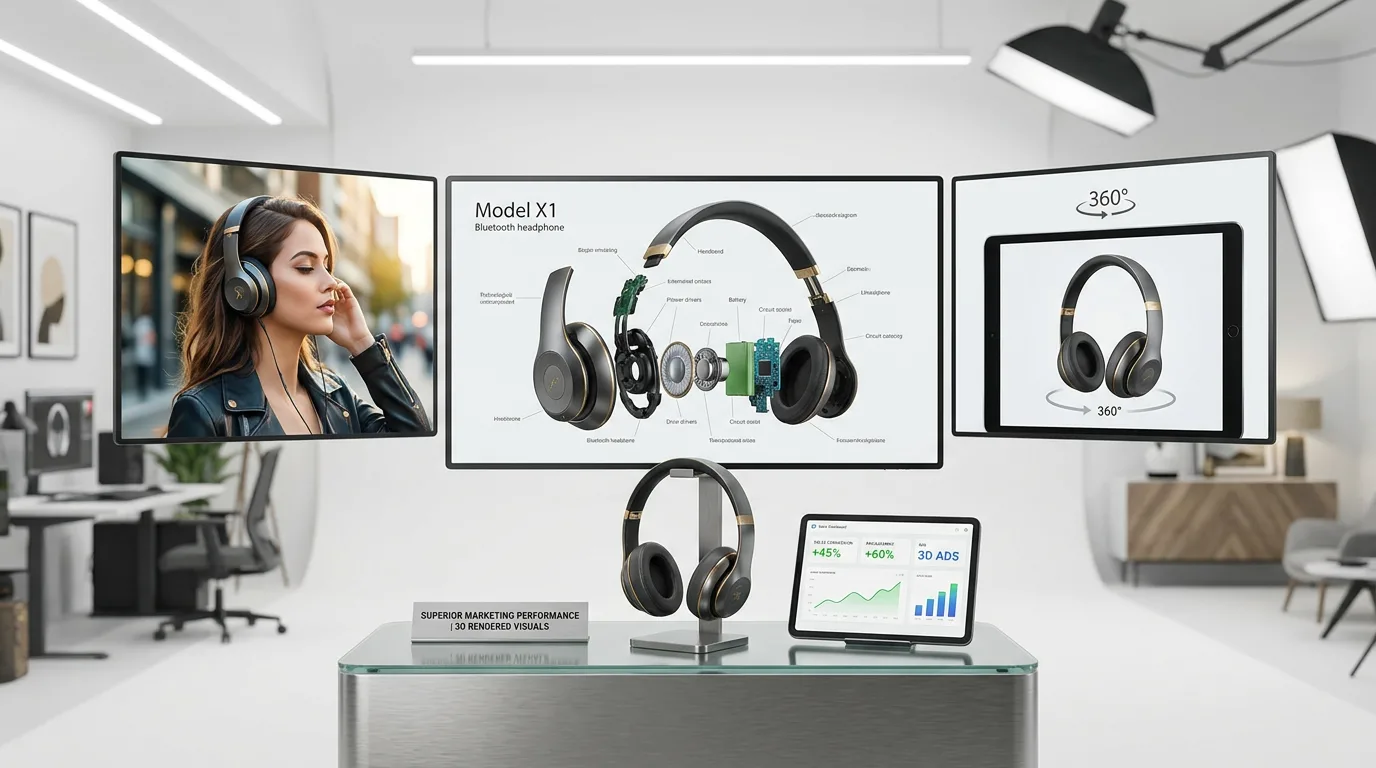
Today’s buyers want clarity before they commit. They want to inspect details, compare finishes, understand scale, and see how the product fits into a real setting. A single front-facing image rarely does enough.
Catalog and marketplace imagery
Clean white-background renders remain essential for Amazon, DTC stores, and distributor catalogs. The difference is that 3D lets you create those images with exact repeatability. If you are selling online, a dedicated amazon product rendering workflow can help keep listing images consistent while supporting variant updates and new SKU launches.
Lifestyle scenes that feel believable
Customers do not just buy products. They buy context. They want to see a chair in a room, a bottle on a bathroom shelf, or a device on a clean workstation. Lifestyle rendering makes that possible without location scouting or rebuilding sets for every campaign. This is where 3d lifestyle scenes how to show your product in a realworld setting becomes especially valuable for brands that need more than standard pack shots.
Technical and educational visuals
Some products need explanation as much as presentation. Medical devices, industrial parts, electronics, and engineered consumer goods often benefit from visuals that show internal structure or assembly. In those cases, section views and exploded diagrams can do what standard photography cannot. For products with multiple components, exploded view 3d render services what they are and when you need one is worth considering.
What quality actually looks like in a professional render
Good rendering is not just about software. It is about judgment. The difference between an average render and a convincing one usually comes down to materials, lighting, proportion, and the small details that make an object feel physically real.
Take packaging as an example. Gloss coating should react to light differently than matte paper. Embossed print should catch highlights subtly, not look stamped on. Transparent plastic should have depth and edge definition. Metals need the right balance of reflection and surface texture. Fabric should show softness without losing shape. These are the details customers may not describe directly, but they notice them immediately.
That is also why photorealism matters. If the image feels artificial, trust drops. If it feels believable, customers focus on the product instead of the rendering itself. A useful reference here is what is photorealistic 3d rendering 360 render, especially for teams trying to understand why some renders convert better than others.
Professional quality also means planning for output. A hero image for a product page is different from a trade show graphic, an investor deck visual, or a zoomable marketplace image. Resolution, composition, and detail level should match the final use. That is why production planning matters as much as modeling skill.
Practical ways to use 3D product modeling in rendering right now
If you are considering this workflow for 2025 or 2026, the best starting point is not “make everything in 3D.” It is identifying where 3D solves the biggest bottleneck first.
Start with your highest-change products
If a product is updated often, rendered assets usually pay off quickly in saved time and fewer reshoots. Packaging-heavy categories, consumer electronics, supplements, cosmetics, and configurable products are common examples.
Build one master model for many outputs
Ask for a model that can support multiple needs: white-background images, close-ups, alternate finishes, and future animations. That keeps the asset useful beyond the first campaign.
Prepare clear source materials
The smoother projects usually start with strong inputs: CAD files, dimensions, label artwork, finish references, and photo examples of the actual product or prototype. The clearer the brief, the better the result.
Think beyond still images
If your buyers want to inspect products from every angle, interactive content can help. A spin sequence often gives shoppers more confidence than a flat image set. For teams exploring this format, 360 product animation how spin renders boost ecommerce conversions explains why rotational views are useful in online selling.
Choose a partner based on process, not promises
A reliable studio should explain how they handle modeling, revisions, material matching, approvals, file security, and future asset reuse. If you are comparing options, read how to choose the best 3d product rendering company for your brand before making a decision.
Common scenarios where brands see the biggest advantage
A furniture brand launching a new collection can create room scenes, isolated product shots, fabric variations, and detail close-ups from one digital setup. A supplement company can update flavors and label versions without rebooking photography. A medical manufacturer can show internal mechanisms clearly for sales teams and training materials. An industrial brand can explain assembly and function before a buyer ever requests a sample.
These are not abstract benefits. They affect how quickly teams can publish, revise, and sell. The more product variants you manage, the more useful a model-based workflow becomes.
And because the asset stays usable, your initial project can support future campaigns. That long-term value is what many brands miss when they compare rendering only to the cost of one photo shoot. The real comparison is between a one-time image and a reusable digital asset library.
Conclusion: build a visual system, not just a set of images
The real advantage of 3D product modeling in rendering is not only that it creates attractive visuals. It gives your business a more flexible content system. You can launch earlier, update faster, maintain consistency, and create more useful product experiences across e-commerce, sales, and marketing.
If your current process feels slow, fragmented, or too dependent on physical samples, now is the right time to rethink it. Our team at 360 Render creates high-quality digital assets for brands that need scalable, realistic product visuals. Explore our 3d product rendering services or contact us to talk through your next project.
Frequently Asked Questions
How does 3D product modeling improve rendering quality and marketing performance in 2025 and 2026?
3D product modeling creates accurate digital assets that produce cleaner, more consistent renders across ecommerce, ads, and product pages. In 2025 and 2026, brands use these models to generate photoreal visuals faster, reduce reshoots, and improve conversion rates with better product presentation.
Why is 3D product modeling more cost-effective than traditional product photography for scaling content?
Once a 3D model is built, teams can reuse it for multiple angles, color variants, seasonal campaigns, and marketplace requirements without organizing new photo shoots. This lowers production costs over time and helps brands scale visual content much more efficiently.
What strategic advantage does 3D product modeling give ecommerce brands launching new products faster?
3D product modeling allows brands to create high-quality renders before physical samples are fully available, which speeds up pre-launch marketing and listing creation. This shortens time to market and gives ecommerce teams more flexibility to test messaging, packaging, and visual concepts early.
How does 3D product modeling support AR, 360-degree views, and omnichannel customer experiences?
A well-built 3D product model can be adapted for static renders, 360-degree viewers, augmented reality, and interactive configurators from the same core asset. That makes it easier for brands to deliver consistent product experiences across websites, mobile apps, retail displays, and marketplaces.
What should companies look for when choosing a 3D product modeling and rendering partner in 2025?
Companies should evaluate modeling accuracy, rendering realism, revision workflow, file compatibility, and the provider's ability to support multiple use cases like ecommerce, AR, and advertising. A strong partner should also understand brand guidelines and deliver scalable assets that remain useful beyond a single campaign.