If you’ve been searching for clarity on 3D product rendering services explained: what to expect and how to choose the right agency, you’re probably at a point where photography feels either too expensive, too slow, or simply not flexible enough for what you need. Maybe you’re launching a product that isn’t manufactured yet. Maybe you need fifty color variants shown across a catalog without setting up a single photoshoot. Whatever the reason, product rendering has become a serious production tool — not just a novelty — and understanding how it actually works will save you time, money, and a lot of disappointment when briefing an agency.
In our studio, we work with a wide range of clients: furniture brands needing lifestyle shots before production, electronics companies building Amazon listings, packaging designers testing label concepts, and architects presenting custom furniture as part of an interior scheme. The work looks different across those categories, but the process — and the common misunderstandings — are remarkably similar. So let me walk you through what this service actually involves, what separates good work from average work, and how to evaluate an agency before you commit.
What 3D Product Rendering Actually Involves
At its core, a product render is a photorealistic image generated from a 3D model using lighting simulation software. The model is built digitally — either from your CAD files, technical drawings, physical samples, or reference photos — and then placed into a virtual environment with lights, materials, and a camera angle. The software calculates how light bounces, absorbs, and reflects across every surface, and outputs an image that looks photographed.
The pipeline breaks down into a few distinct phases:
- Modeling: Building the geometry of your product in 3D. This needs to be accurate. Dimensions, proportions, and surface details all need to match the real object (or the intended design, if it doesn’t exist yet).
- Texturing and materials: Assigning realistic material properties — roughness, reflectivity, transparency, subsurface scattering for things like plastics and soft materials. This is where renders often fall apart if the artist doesn’t have strong material knowledge.
- Lighting and environment setup: Creating a scene that makes the product read correctly. Studio lighting for e-commerce. Contextual environments for lifestyle shots. Exterior lighting for outdoor furniture or architectural products.
- Rendering and post-processing: Running the final calculation and doing color grading, compositing, and cleanup in post.
Each phase takes time and skill. Agencies that quote very fast turnarounds without asking detailed questions are often skipping steps or relying on generic asset libraries rather than building accurate geometry for your specific product.
3D Product Rendering Services Explained: What Clients Typically Receive
Deliverables vary by agency and project scope, but a standard engagement usually includes a set of final high-resolution images in TIFF or PNG format, often with transparent backgrounds for e-commerce use. More comprehensive packages might include multiple camera angles, lifestyle compositions, exploded views, close-up detail shots, and turntable animations.
One thing clients often don’t realize upfront: you also receive, in effect, a reusable 3D asset. If an agency builds your product model correctly, that same file can be used for future renders, different color versions, new scenes, or even AR/VR applications later. This is a significant long-term advantage over photography, where every new variation means a new shoot.
The revision process is also important to understand. Most professional agencies work in rounds — you’ll review low-resolution previews or draft renders before the final output is produced. This is normal and necessary. It’s how errors in modeling, material interpretation, or composition get caught before the expensive final render is run. Agencies that don’t offer review rounds should raise a flag.
What Separates Genuinely Good Renders from Average Ones
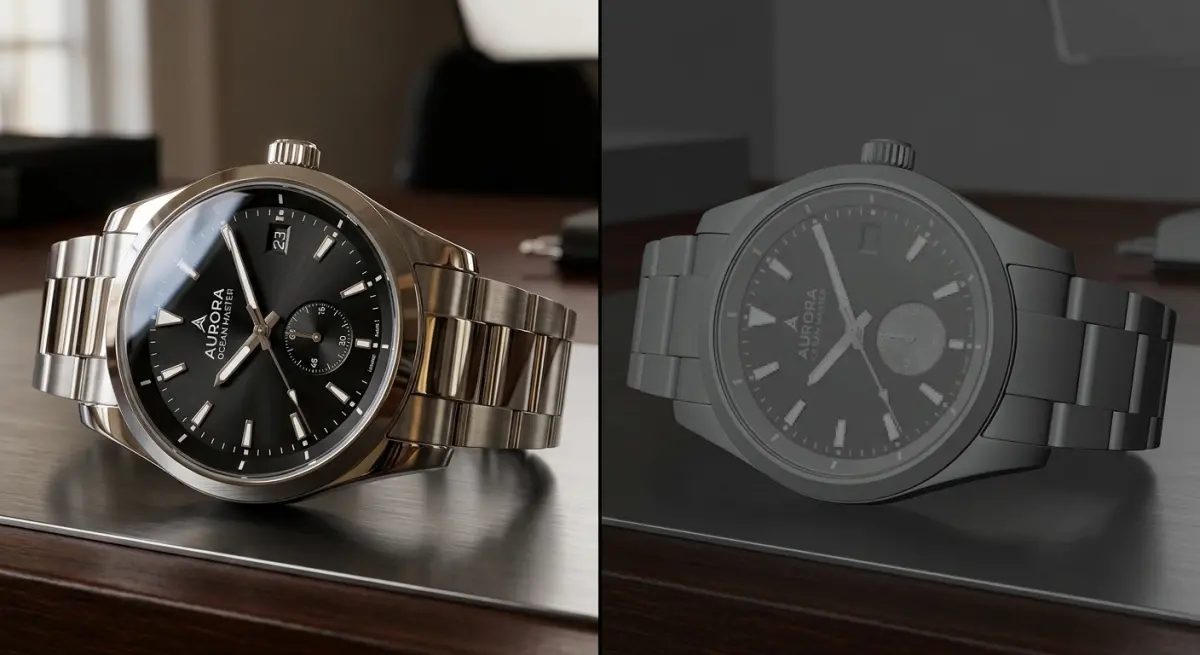
This is the part most clients struggle to evaluate because, to the untrained eye, two renders can look similar even when one is technically superior. Here’s what actually matters:
Material accuracy
The way a material behaves under light reveals everything. Brushed aluminum has a very specific anisotropic reflection pattern. Matte plastic scatters light differently than satin-finish plastic. Fabric needs proper fiber geometry, not just a bump map applied to a flat surface. When materials are approximated rather than properly constructed, the render reads as “CG” even if the viewer can’t articulate exactly why.
Lighting that tells the truth
Lighting in a product render has a specific job: reveal the form, show the texture, and make the product desirable without lying about what it looks like. Over-lit renders flatten the product. Dramatic lighting hides detail. Good lighting is calibrated to the specific object — which means it changes for every product. An agency reusing the same HDRI for every job isn’t approaching this thoughtfully.
Accurate proportions and silhouette
If the model geometry is off — even slightly — the product will feel wrong to anyone who knows the physical object. Clients who manufacture the product will notice immediately. So will experienced buyers. We always reference technical drawings or actual sample measurements before finalizing geometry, and we verify proportions from multiple angles before moving to materials.
Camera work
The choice of focal length, camera height, and distance from the subject has a massive effect on how a product reads. A wide angle distorts. Too-high camera angles make products look small. The best agencies bring actual photography knowledge to their camera setups — thinking about how a real photographer would shoot the object, then applying that thinking digitally.
How to Evaluate a 3D Rendering Agency Before You Hire
Portfolio is the obvious starting point, but look past the showpiece images. Does their portfolio include products similar to yours in material complexity? A studio that excels at soft furnishings may not have the material expertise for glossy consumer electronics. Specialization matters.
Ask about the source files they need. A professional agency will tell you exactly what format they prefer, what level of detail they need in drawings, and what happens if your references are incomplete. Vague answers here suggest a less structured process.
Understand the revision policy before signing anything. How many rounds are included? What counts as a revision versus a scope change? If you ask for a different color variant after the model is approved, is that included or billed separately? These questions protect both parties.
Check how they handle technical accuracy. If you send a CAD file with precise dimensions, can they match those dimensions exactly? Ask them directly. Some agencies model by eye from reference photos, which is fine for purely decorative objects but inadequate for products where precise geometry matters — hardware, electronics, medical devices, furniture with specific ergonomic requirements.
For clients specifically looking for professional 3D product rendering services, reviewing the agency’s process documentation — not just their portfolio — gives you a much better sense of how organized and reliable they are under pressure.
Common Mistakes Clients Make When Briefing a Rendering Agency
We’ve seen the same patterns repeatedly, and most delays and disappointing results trace back to a few avoidable brief problems:
Sending insufficient reference material. “It’s a bottle — just make it look good” is not a brief. Material, finish, exact dimensions, label placement, cap type, fill level — all of this needs to be specified. The more specific your input, the more accurate the output.
Having no clear idea of intended use. A render for a social media post has different resolution and composition requirements than one going on a billboard or a product listing on Amazon with mandatory white background specs. Tell the agency where the image will be used before they start.
Approving models before reviewing them carefully. In the modeling approval stage, clients sometimes skim through and approve quickly, then raise issues about proportions or details once the final render comes in. By that point, corrections require rebuilding — which takes time and may affect the project cost. Take model review seriously.
Expecting photorealism at illustration pricing. Quality rendering involves skilled labor, licensed software, and computing resources. Unusually low quotes usually mean generic assets, low render quality, or outsourced work with poor quality control. Price should reflect complexity.
When Product Rendering Makes More Sense Than Photography
Photography wins when you have a physical product, a budget for a proper shoot, and the need to capture authentic texture in a way that rendering occasionally struggles with — certain organic materials, for instance, or products where precise color matching under different light conditions is critical for compliance.
Rendering wins when the product doesn’t exist yet, when you need many variants quickly, when post-production flexibility matters, or when your budget for a multi-scene shoot would be significantly higher than a rendering project covering the same scope. It also wins for any product that’s difficult or expensive to photograph — large furniture, fragile prototypes, oversized industrial equipment.
The two approaches aren’t mutually exclusive. Some of the best product marketing we’ve seen uses rendered lifestyle compositions combined with real photography details for packaging and close-up texture shots.
Ready to Start a Project?
Understanding the fundamentals of 3D product rendering services — what the process involves, what makes it work well, and how to brief an agency properly — puts you in a much stronger position to get results that actually serve your marketing or production goals. The difference between a render that sells a product and one that just shows it comes down to how well the brief is written and how experienced the team executing it is.
If you’re ready to discuss a project or want to understand what’s involved for your specific product category, get in touch with our team at 360render.com. We’ll give you an honest assessment of scope, timeline, and what we’d need from you to get it right.
Frequently Asked Questions
How much do 3D product rendering services typically cost?
3D product rendering costs vary widely depending on complexity, ranging from $50–$200 per image for simple objects to $500–$2,000+ for highly detailed or photorealistic renders. Factors like number of angles, scene complexity, animation requirements, and agency experience all influence pricing. Requesting itemized quotes from multiple agencies helps you benchmark costs and understand exactly what you're paying for.
How long does it take to receive completed 3D product renders from an agency?
Turnaround time for 3D product rendering typically ranges from 3 to 10 business days for standard projects, though rush delivery options are often available at an additional cost. Complex products with intricate textures, lighting setups, or multiple scene variations can extend timelines to 2–4 weeks. Always confirm delivery schedules upfront and account for revision rounds when planning your project timeline.
What files or information do I need to provide to a 3D rendering agency?
Most 3D rendering agencies require CAD files, technical drawings, or physical product dimensions to accurately model your product, along with material specifications like color swatches, finish types, and texture references. High-resolution brand assets, packaging details, and reference images of desired mood or environment also help agencies align with your vision. The more detailed your brief, the fewer costly revisions you'll need later.
How do I evaluate the quality of a 3D product rendering agency before hiring them?
Review the agency's portfolio specifically for products similar to yours, paying close attention to material realism, lighting accuracy, and overall photorealism in their finished renders. Ask for client references or case studies and check third-party reviews on platforms like Clutch or Google to verify reliability and communication quality. Requesting a small paid test render before committing to a large project is a practical way to assess their workflow and output quality firsthand.
What is the difference between 3D product rendering and traditional product photography?
3D product rendering creates photorealistic images entirely using computer software, eliminating the need for physical prototypes, studio setups, or location shoots, making it especially cost-effective during early product development stages. Traditional product photography captures real physical items under controlled lighting and requires a finished product to exist before shooting can begin. Rendering offers greater flexibility for showing color variants, environments, and usage scenarios without additional shoots, while photography may still be preferred for conveying authentic textures and tactile details.
Also read: Using 3D Product Rendering Services for Kickstarter Campaigns: How to Pitch Before You Manufacture