When an industrial manufacturer spends years engineering a new piece of heavy equipment, the last thing they want is a product launch that falls flat. Yet that’s exactly what happens when the only visuals available are grainy prototype photos taken under warehouse lighting. This is where 3D machine rendering: how industrial manufacturers use CGI for product launches has become a critical part of the modern go-to-market strategy. From turbines and conveyors to hydraulic presses and CNC machines, CGI gives manufacturers a way to present their products at their absolute best — before a single production unit ships.
Industrial products are notoriously difficult to photograph well. They’re large, heavy, often located in inaccessible facilities, and they tend to look like raw metal and grease rather than polished consumer goods. Traditional photography requires finished units, proper staging, professional lighting setups, and significant logistics. CGI sidesteps all of that. A 3D model built from CAD data can be dropped into any environment, lit perfectly, shot from any angle, and rendered to photorealistic quality — all months before the machine actually exists in its final form.
This isn’t just about aesthetics either. Industrial buyers are sophisticated. They want to understand how a machine works, how it fits into their facility, and how it compares to competing products. High-quality 3D visuals speak directly to those concerns in a way that words in a spec sheet never can.
Why Industrial Manufacturers Are Turning to CGI Before Physical Prototypes Are Ready
There’s a persistent misconception that CGI is only for consumer products — smartphones, furniture, sneakers. But some of the most compelling use cases come straight from the factory floor. Industrial manufacturers face a unique challenge: their product development cycles are long, their trade show schedules are fixed, and their sales teams need marketing materials well before the engineering department is done tweaking tolerances.
Consider a company launching a new industrial compressor. The engineering team won’t sign off on the final design until six months before the scheduled trade show. Traditional marketing would require waiting for a finished unit, arranging a photo shoot, and then rushing everything into production. With CGI, the marketing team can work directly from the engineering CAD files — the same files the engineers are using — and begin building photorealistic renders months earlier. By the time the trade show arrives, the company has a full library of product imagery, animations, and interactive content ready to go.
This parallel workflow is one of the biggest practical advantages CGI offers. Marketing doesn’t have to wait for manufacturing. That time savings alone can determine whether a product launch lands on schedule or misses a critical industry event.
What Goes Into a High-Quality 3D Machine Render
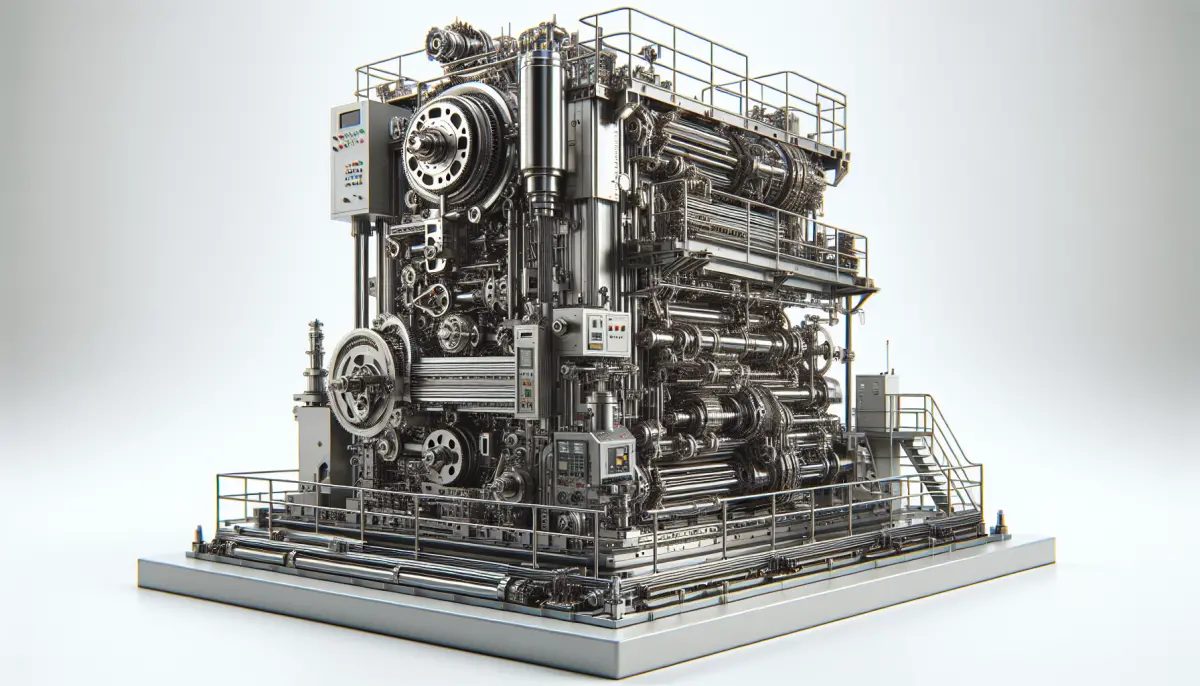
Not all 3D rendering is created equal. A convincing industrial machine render requires a specific combination of technical knowledge and artistic skill that not every studio possesses. Here’s what separates genuinely effective industrial CGI from renders that look like video game assets.
Starting with Accurate CAD Data
The foundation of any good machine render is the 3D model itself. Most industrial manufacturers already have detailed CAD files from their engineering departments. A skilled rendering studio can import these files — whether they’re in STEP, IGES, SolidWorks, or AutoCAD formats — and build render-ready geometry from them. This ensures technical accuracy. The proportions, the part placements, the mechanical details — everything matches the actual product.
If you’re working with a studio that builds models from scratch based on rough sketches, expect longer turnaround times and more revision rounds. Starting from CAD dramatically compresses the modeling phase and reduces the risk of inaccuracies that could mislead potential buyers or create problems downstream in sales conversations.
Materials, Textures, and Surface Finish
Industrial machines have a specific visual language. Brushed aluminum, powder-coated steel, machined surfaces, rubber gaskets, industrial paint finishes — each material needs to behave correctly under virtual lighting to look believable. A poorly textured metal surface looks plastic. A poorly lit chrome component looks muddy. Getting materials right is where artistic expertise comes in, and it’s often what separates a render that earns trust from one that raises eyebrows.
Color accuracy also matters more than people expect. Brand colors on machinery are often precise Pantone or RAL specifications, and buyers who recognize a brand’s signature color scheme need to see it rendered faithfully. Misrepresenting a product’s finish — even accidentally — can create awkward conversations during the sales process.
Environment and Context
Showing a machine floating against a white background works for some catalog images, but it misses a huge opportunity. Industrial buyers think spatially. They want to see how the machine fits into a facility, how it connects to adjacent equipment, how operators interact with it. Placing a render inside a realistic factory or warehouse environment makes the product feel real and gives buyers a mental model they can actually use.
A well-designed industrial environment doesn’t need to be elaborate. Even a clean, well-lit factory floor with subtle background detail can provide the right context without distracting from the product itself. The machine should always be the visual hero — the environment is there to support it.
Applications Beyond Static Images
Static renders are valuable, but they’re just the starting point. Industrial manufacturers who get the most out of CGI think about the full range of visual content they need across their entire marketing and sales cycle.
Product Animation for Complex Mechanisms
Some machines are defined by how they work, not just how they look. A gearbox, a robotic arm, a multi-stage filtration system — these products are almost impossible to explain with static images alone. Animated 3D product videos can show internal mechanisms in motion, demonstrate assembly sequences, and highlight the engineering advantages that differentiate one product from a competitor’s. For trade shows, an animated video playing on a screen can attract more attention than a physical static display.
If you’re considering 3D product animation services for your next product launch, the same CAD-derived model used for static renders can typically be reused for animation — so there’s no need to rebuild assets from scratch.
360-Degree Interactive Views
Buyers who can’t attend a trade show or visit a facility still need a way to examine the product carefully. Interactive 360-degree views let them rotate the machine in real time, zoom in on details, and explore from angles they choose. This kind of interactivity significantly increases engagement on product pages and can reduce the number of “can you send more photos” requests that sales teams field after initial outreach.
Exploded Views and Technical Diagrams
For products with complex internal components, exploded view renders are incredibly effective. They show how individual parts relate to the whole, which is useful for both marketing and technical documentation. Service manuals, installation guides, and training materials can all benefit from CGI-generated exploded views that are cleaner and more informative than traditional technical illustration.
Real-World Scenarios Where CGI Solves Specific Manufacturer Problems
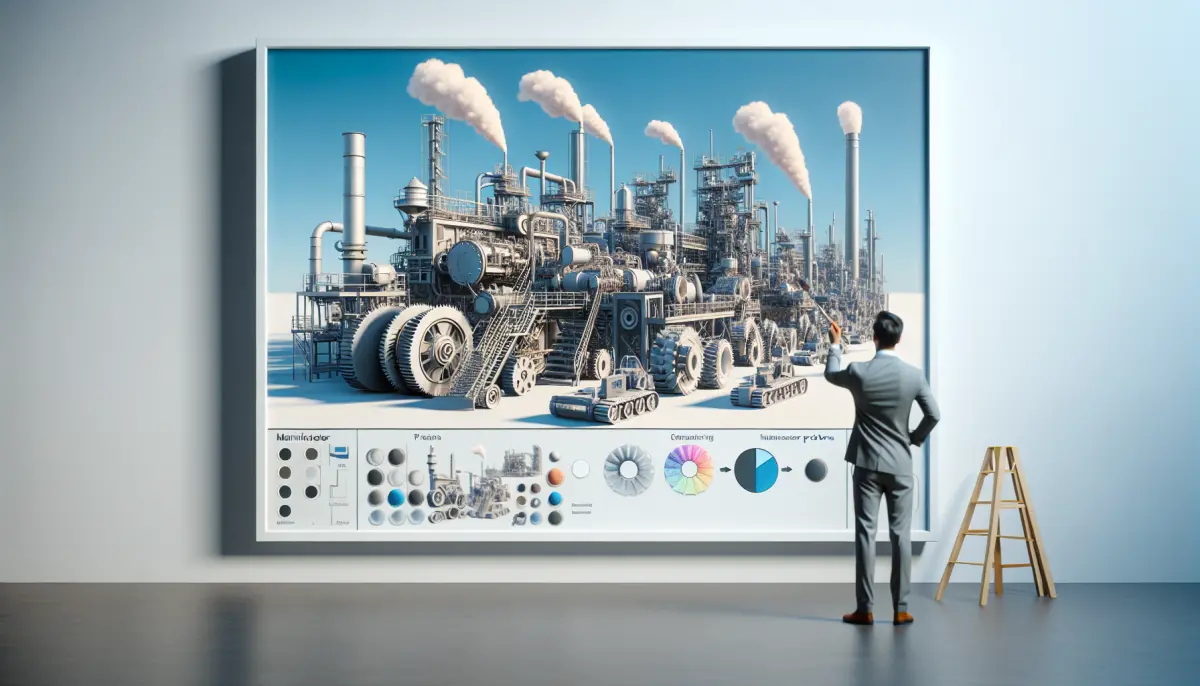
Abstract benefits are one thing. Specific scenarios make the value clearer. Here are a few situations where industrial manufacturers consistently find CGI to be the right tool.
Launching at a trade show before the machine is built: A manufacturer has a trade show date locked in, but the physical machine won’t be ready. CGI renders and an animated video allow them to display, present, and even take orders on a product that doesn’t yet physically exist. Sales teams have something tangible to show prospects. The launch happens on schedule.
Customization options across product variants: An industrial pump manufacturer offers the same base unit in twelve different configurations — different port sizes, different motor types, different mounting options. Photography would require twelve separate photo shoots. CGI allows the team to swap components within a single scene and render all twelve variants in far less time and at significantly lower cost.
Selling into markets where physical demonstrations aren’t possible: Heavy equipment manufacturers selling into international markets can’t easily ship demonstration units to every prospect. High-quality CGI, combined with interactive tools and animation, becomes the primary product experience for buyers who will never see the machine in person before purchasing.
For industries that deal in large-scale equipment, industrial product rendering addresses these challenges directly — delivering visuals that communicate both the scale and the engineering sophistication of complex machinery.
Practical Tips for Getting the Best Results from a 3D Rendering Studio
If you’re an industrial manufacturer planning your first major CGI project, a few practical considerations will make the process smoother and the output significantly better.
Share your CAD files early. The more complete and accurate the source geometry, the better the final render. Withholding CAD data out of intellectual property concerns creates friction and usually results in less accurate models. A reputable studio will have NDAs in place to protect your proprietary designs.
Define the purpose of each image before production starts. A render intended for a trade show banner has different requirements than one going on a website product page or inside a sales brochure. Knowing the output format, size, and context helps the studio make the right creative decisions from the beginning.
Involve your sales team in the brief. Sales people know what questions prospects always ask and what details they focus on during evaluations. That insight should shape which angles are rendered, what features get highlighted, and whether animation or interactivity is needed.
Plan for a revision cycle. First renders are rarely final. Budget time and feedback rounds for refinements — especially on material accuracy and environmental context. Treating the first draft as a starting point rather than a finished product makes the overall process less frustrating.
Think about the full content ecosystem. If you’re investing in a 3D model for renders, consider what else you might build from the same asset — animations, interactive viewers, AR experiences, internal training materials. A well-built model has a long shelf life and can serve multiple departments across multiple projects.
Conclusion: CGI Is Now a Core Tool in Industrial Product Marketing
The manufacturing industry moves fast, and product launches are high-stakes moments. 3D machine rendering: how industrial manufacturers use CGI for product launches has evolved from a creative novelty into a practical necessity — one that solves real problems around timing, cost, customization, and global reach. The manufacturers who figure this out early gain a genuine advantage in how their products are perceived before a single unit ships to a customer.
Whether you’re launching a single flagship product or building out a full library of marketing visuals for a complex product line, working with a studio that understands both the technical demands of industrial machinery and the creative requirements of effective marketing makes all the difference. If you’re ready to talk through what a CGI project could look like for your next product launch, get in touch with our team and we’ll walk you through the process from CAD file to final image.
Frequently Asked Questions
What is 3D machine rendering and how does it differ from traditional product photography for industrial manufacturers?
3D machine rendering is the process of using computer-generated imagery (CGI) to create photorealistic visuals of industrial machines and equipment without requiring a physical prototype. Unlike traditional product photography, which demands a fully built machine, studio setup, and costly logistics, CGI allows manufacturers to produce high-quality images and animations from digital CAD files alone. This means industrial companies can showcase complex machinery with perfect lighting, angles, and configurations long before a single unit rolls off the production line.
How much does 3D machine rendering cost compared to a traditional product photography shoot for industrial equipment?
A professional 3D machine rendering project for industrial equipment typically ranges from $2,000 to $20,000 depending on complexity, number of views, and animation requirements, while a traditional industrial product photography shoot can cost $5,000 to $50,000 or more when factoring in studio fees, logistics, transportation of heavy machinery, and post-production editing. Over the lifecycle of a product launch, CGI becomes significantly more cost-effective because assets can be easily modified, recolored, or updated without scheduling new shoots. Many manufacturers report recouping the initial CGI investment by the second or third product variation they need to visualize.
Can 3D machine rendering be used before a product is manufactured to support pre-launch marketing campaigns?
Yes, one of the most powerful advantages of 3D machine rendering is that it allows industrial manufacturers to create fully detailed, photorealistic product visuals directly from engineering CAD files before the machine ever enters production. This capability enables companies to run full pre-launch marketing campaigns, create trade show materials, publish sales brochures, and even generate e-commerce listings months ahead of the official product release. Pre-launch CGI campaigns have been shown to accelerate sales cycles by allowing sales teams to present and configure products to customers during the development phase itself.
What file formats and design assets do industrial manufacturers need to provide to start a 3D machine rendering project?
Industrial manufacturers typically need to supply CAD files in formats such as STEP, IGES, SolidWorks, CATIA, or AutoCAD, which serve as the geometric foundation for creating accurate 3D renders. In addition to CAD data, providing brand guidelines, material specifications, color codes, surface finish references, and any physical samples or reference photos helps the CGI studio achieve the most accurate and brand-consistent output. The more complete the design assets provided upfront, the faster the rendering process moves and the fewer revision cycles are required before final delivery.
What types of 3D machine rendering deliverables are most effective for industrial product launch campaigns?
The most effective CGI deliverables for industrial product launches typically include photorealistic still images in multiple configurations, exploded-view renderings that highlight internal components, 360-degree interactive spins, and animated product videos demonstrating machine operation or assembly sequences. Augmented reality (AR) experiences created from 3D assets are also gaining traction, allowing potential buyers to virtually place industrial equipment in their own facility environments before purchasing. Combining static imagery for print and digital advertising with motion content for social media and trade shows gives manufacturers a comprehensive visual asset library that drives engagement across every stage of the buyer journey.