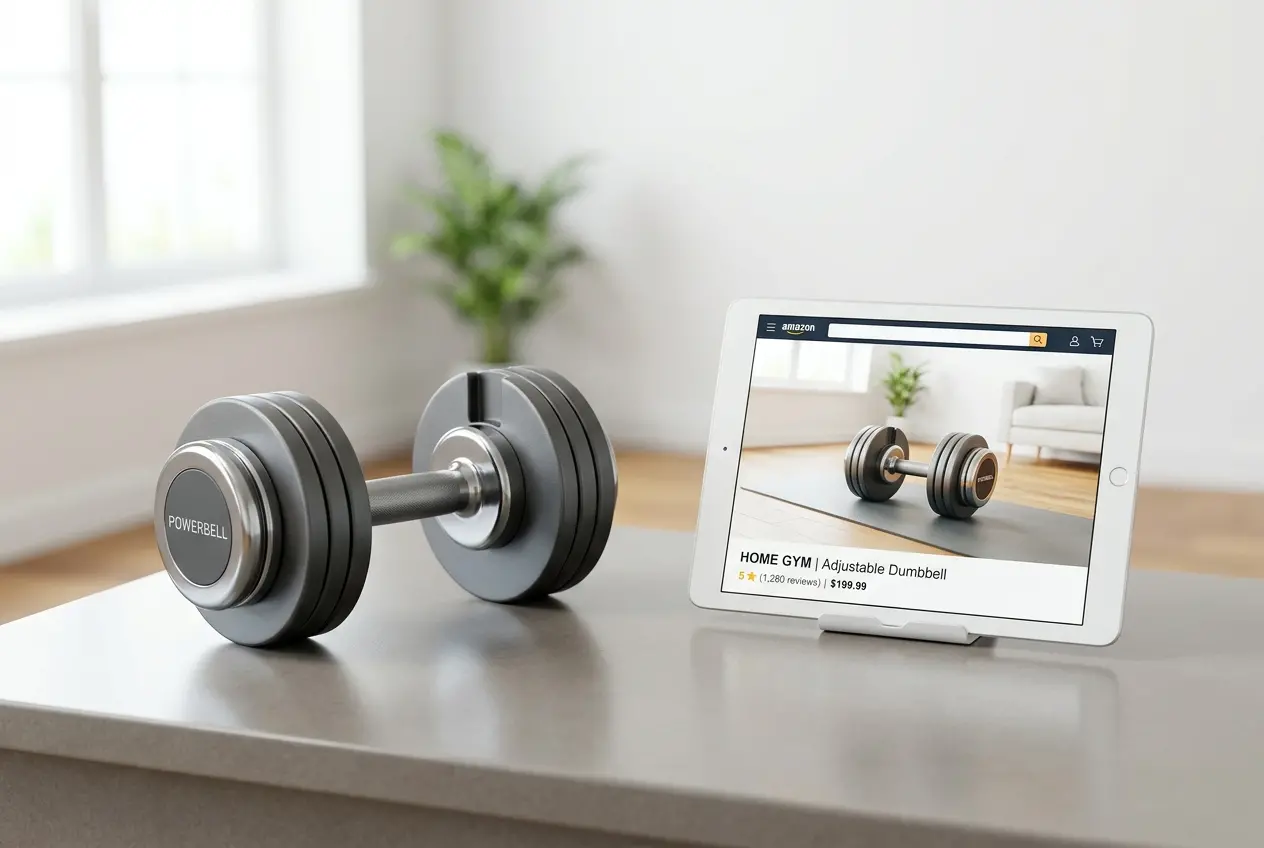
A treadmill folded up in the corner of a garage doesn’t sell itself. Neither does a stack of resistance bands photographed on a white seamless in a studio somewhere. Fitness equipment lives and dies on how well a buyer can picture it in their own space, mid-workout, sweat and all. That’s exactly why more brands are learning how to use 3D lifestyle images to sell home fitness equipment on Amazon and Shopify without a photoshoot — because a CGI scene of a home gym, a sunlit balcony workout, or a converted spare room does the job a plain product shot simply can’t.
We’ve worked with enough fitness hardware brands now to know the pattern. A founder designs a great adjustable dumbbell or a smart rowing machine, gets a decent white-background shot from the factory, and then hits a wall when it’s time to build out the Amazon listing or the Shopify product page. Lifestyle photography for fitness gear is expensive — you need a location, a model who actually looks like they lift, lighting that doesn’t wash out chrome and rubber finishes, and a shoot day that can get derailed by anything from a cancelled model to a rained-out rooftop location. CGI removes almost all of that risk.
This post walks through how the process actually works, where it saves money, where it doesn’t, and what we’ve learned from producing these scenes for equipment brands selling into competitive categories.
Why Fitness Equipment Needs Lifestyle Context More Than Most Products
A kitchen gadget can survive on a clean product shot because people already know how a whisk works. Fitness equipment is different — buyers are evaluating footprint, how it fits in a room, whether it looks intimidating or approachable, and whether they can picture themselves actually using it three months from now. That’s an emotional decision as much as a functional one.
Amazon’s A+ Content and Shopify’s product template both reward this. A listing with only white-background shots and a spec table reads like a warehouse catalog. Add two or three lifestyle scenes — someone using the equipment in a naturally lit home gym, a close-up of hands on the grips mid-rep, a wide shot showing the equipment folded and stored against a wall — and the listing suddenly answers the questions a buyer was too lazy to type into the Q&A section.
How to Use 3D Lifestyle Images to Sell Home Fitness Equipment on Amazon and Shopify: The Actual Workflow
The process starts with the same CAD or product mesh used for the studio renders. If you’ve already had your product modeled for 3D product rendering services, that model gets reused here — no rebuilding from scratch, which is one of the biggest cost advantages over a real shoot where every new scene means new logistics.
From there, we build or license a 3D environment — a home gym with polished concrete flooring, a garage conversion with exposed rafters, a minimalist apartment corner with a yoga mat rolled out. We place a human figure (either a stock 3D character posed and textured to look natural, or increasingly, an AI-assisted human render layered with CGI lighting) interacting with the product. Lighting gets matched to whatever mood the brand wants: bright and clinical for a premium smart-equipment brand, warm and moody for a strength-training brand leaning into a garage-gym aesthetic.
The output is a photorealistic still — or a sequence of them — that reads as a real photograph unless someone knows to look for the tells. Buyers scrolling Amazon on a phone are not examining pixel-level detail. They’re absorbing an impression in under two seconds, and CGI at this quality level delivers that impression just as well as photography does.
Where the Model and Environment Come From
Two routes, depending on budget and how specific the scene needs to be:
| Approach | Best For | Trade-off |
|---|---|---|
| Stock 3D environments + posed human figures | Brands needing several scene variations fast | Less unique, but far cheaper and faster to iterate |
| Custom-built environment matching brand identity | Established brands with a defined visual style | Higher cost upfront, but reusable across many future products |
Most brands starting out go with stock environments dressed to match their aesthetic — we adjust flooring, wall color, window light, and prop placement enough that it doesn’t look like the same gym every competitor is using. Once a brand has a signature look worth protecting, we build a custom environment they own outright.
Amazon-Specific Considerations
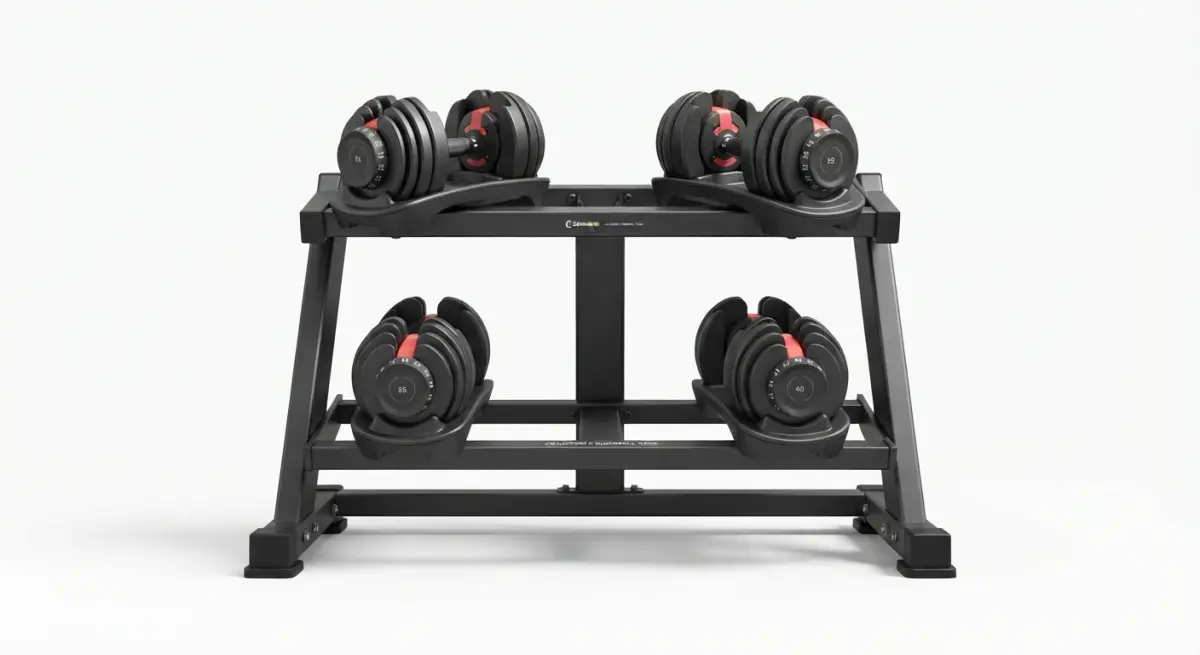
Amazon has rules about what counts as the “main” listing image — it generally needs to be on a pure white background with the product filling most of the frame, no lifestyle context allowed there. Lifestyle CGI belongs in the secondary image slots and in A+ Content modules. That’s actually where it does the most work anyway, because by the time a shopper is scrolling through secondary images, they’ve already clicked in and they’re deciding, not just comparing thumbnails.
We also build in scale and proportion cues deliberately. Fitness equipment listings get returned a lot because buyers misjudge size — a kettlebell that looks compact in a white-background shot suddenly feels huge in a small apartment. A lifestyle render showing the equipment next to a human figure, a doorway, or a piece of furniture gives buyers an instinctive sense of scale that a spec sheet in inches never quite achieves.
Shopify and Brand Storytelling
Shopify pages give more room to build a narrative, and this is where lifestyle CGI earns its keep. A sequence of three or four images — unboxing, setup, mid-workout, folded for storage — tells a story a single hero shot can’t. We’ve found that fitness brands selling direct-to-consumer get the most mileage out of building one signature environment (a “brand gym”) and reusing it across their entire product catalog. It creates visual consistency across the whole site, which matters more for a Shopify store trying to look like a proper brand rather than a single-SKU seller.
This is also where CGI genuinely outperforms photography on cost efficiency. Shooting a full catalog of ten products in the same physical gym means renting the space repeatedly, re-lighting each time, rebooking a model. Building the gym once in 3D means every new product just gets composited into the same environment with consistent lighting — the marginal cost of each additional scene drops fast.
What Actually Works (and What Clients Get Wrong)
A few patterns from projects we’ve done:
- Overposed figures kill realism. A human model frozen mid-bicep-curl with a magazine-cover smile looks fake even when the render quality is excellent. Slightly candid poses — mid-motion, looking at the equipment rather than the camera — read as far more believable.
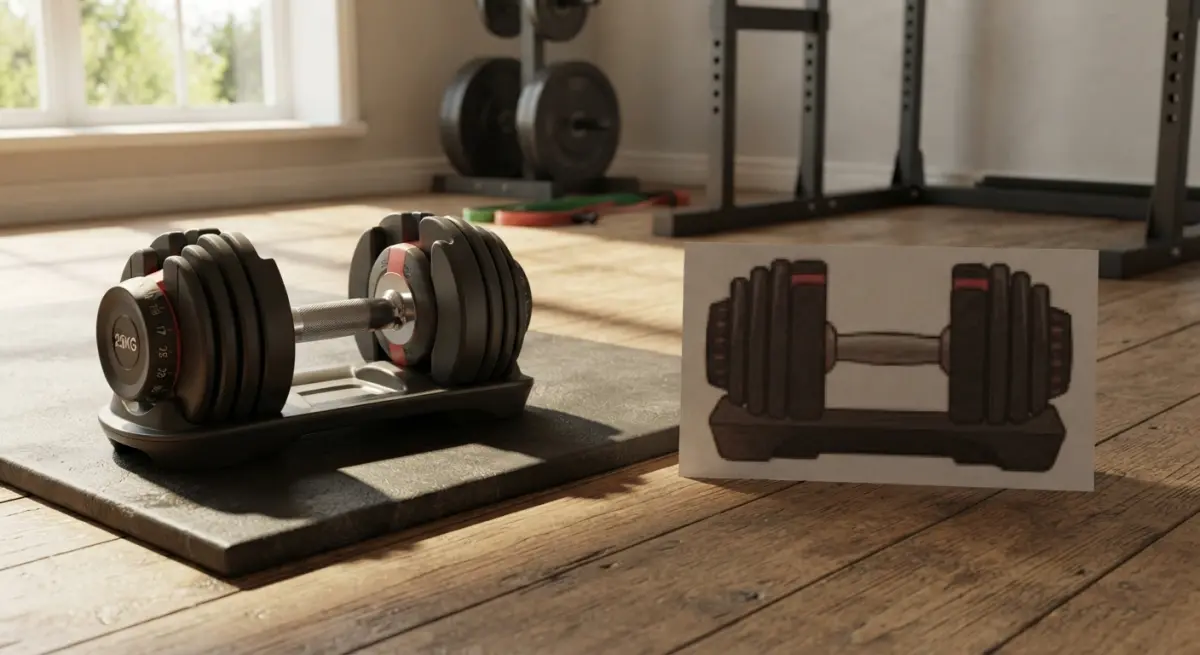
- Sweat, texture, and imperfection sell trust. A pristine, sterile scene tips people off that something’s synthetic. Adding scuffed flooring, a water bottle on the ground, a slightly rumpled towel — small imperfections make the CGI disappear into believability.
- Material accuracy matters more here than in most categories. Rubber grips, knurled steel bars, foam padding — if these don’t render with correct texture and reflectivity, experienced buyers (and fitness buyers tend to be experienced) will notice instantly. This is where working with a studio that understands 3D rendering for e-commerce pays off — the standards for believability are higher when the audience actually knows what rubber and steel are supposed to look like under gym lighting.
- Clients often ask for too much polish. A brand-new, catalog-perfect environment can undercut trust for fitness gear specifically, because the target buyer wants to imagine their own garage, not an aspirational showroom they’ll never own. We usually recommend dialing the “aspirational” dial down a notch from what other product categories might use.
- Reusing one environment across a catalog saves real budget. Brands that come to us wanting a lifestyle scene for every single SKU individually spend far more than brands that greenlight one strong environment and let us populate it with different products over time.
Where CGI Still Has Limits
It’s worth being honest about this. If a brand’s entire identity is built around a real, recognizable athlete or influencer, CGI lifestyle imagery can’t replace that person’s actual likeness — not without licensing complications that make it not worth attempting. Similarly, brands selling heavily on the emotional authenticity of a specific real gym or real community (a boutique studio’s own equipment line, for instance) may find that real photography of their actual space serves the brand story better than a generic CGI environment ever could. CGI is a tool for scale and cost efficiency, not a universal replacement for every kind of brand storytelling.
For most fitness equipment sellers on Amazon and Shopify, though — brands manufacturing at volume, selling into competitive categories, needing dozens of scene variations without dozens of shoot days — the case is clear.
Getting Started
If you’re sitting on CAD files or even just a finished product and a stack of average photos, there’s no need to book a studio and a model before your next listing update goes live. Reach out through our contact page and send over your product files — we’ll walk you through what a lifestyle CGI package would look like for your catalog, what it costs relative to a real shoot, and how fast we can get your first scene in front of you for approval.
Frequently Asked Questions
What are 3D lifestyle images and how do they help sell home fitness equipment online?
3D lifestyle images are photorealistic renders that place your fitness equipment into realistic home settings like living rooms or garage gyms, created entirely with 3D software instead of physical photography. They help sell products by showing customers how the equipment looks in real use scenarios, building trust and boosting conversion rates on marketplaces like Amazon and Shopify.
How much does it cost to create 3D lifestyle images compared to a traditional photoshoot?
Traditional photoshoots for fitness equipment often cost $2,000-$10,000+ once you factor in studio rental, models, photographers, and props, plus reshoots if products change. 3D lifestyle images typically cost a fraction of that, often $50-$300 per scene, and can be reused or modified endlessly without additional shoot expenses.
Do I need a physical product sample to create 3D lifestyle renders?
No, you don't need a physical sample; 3D artists can build accurate models using your CAD files, product specs, or even detailed reference photos and dimensions. This is especially useful for pre-launch products, crowdfunding campaigns, or equipment still in manufacturing.
How can I use 3D lifestyle images to meet Amazon and Shopify image requirements?
3D renders can be formatted to meet Amazon's main image white-background requirements while also creating secondary lifestyle images showing the product in home gym settings, which Amazon explicitly allows and encourages for A+ Content and infographics. On Shopify, these same renders work seamlessly across product pages, banners, and ads since you control the platform's design flexibility entirely.
What file formats and specifications should I request for 3D fitness equipment lifestyle images?
Request high-resolution JPEG or PNG files at minimum 2000×2000 pixels for zoom functionality on Amazon, plus layered PSD or source files for future edits without full re-renders. Also specify aspect ratios matching your platform needs, such as square for Amazon and both square and horizontal for Shopify banners and social ads.