If you’ve spent any time on Amazon, IKEA’s website, or a direct-to-consumer furniture brand lately, you’ve already seen 3D lifestyle images for e-commerce — you just may not have known they weren’t photographs. A sofa sitting in a beautifully lit Scandinavian living room. A skincare bottle perched on a marble shelf with morning light streaming through frosted glass. A pair of wireless headphones resting on a minimalist desk next to a steaming coffee mug. These images look like they were shot in a professional studio. Many of them weren’t. They were built entirely in 3D software, and understanding 3D lifestyle images for e-commerce: what they are, when to use them and why they outperform studio shots is increasingly important for any product brand that wants to compete visually without spending a fortune on physical production.
In our studio, we work with everyone from furniture manufacturers in India shipping to European markets, to small skincare brands launching on Shopify, to consumer electronics companies updating their entire product catalog. The question we hear constantly is: “Do we actually need to shoot this, or can we render it?” The answer, more often than not, is that rendering gives them something a studio shoot simply can’t — and not just on cost.
Let’s break this down properly.
What 3D Lifestyle Images for E-Commerce Actually Are
A product image shows you the object. A lifestyle image shows you the object living somewhere. It puts the product in context — in a room, on a surface, alongside complementary objects — so the buyer can imagine it in their own life. That’s the core purpose.
Now, traditionally, lifestyle images meant hiring a photographer, booking a studio, renting or building a set, sourcing props, arranging everything, and shooting for a day. The product had to be physically present. If it wasn’t manufactured yet, you waited. If it came in twelve colorways, you either shot all twelve or chose your favorite and hoped buyers could imagine the rest.
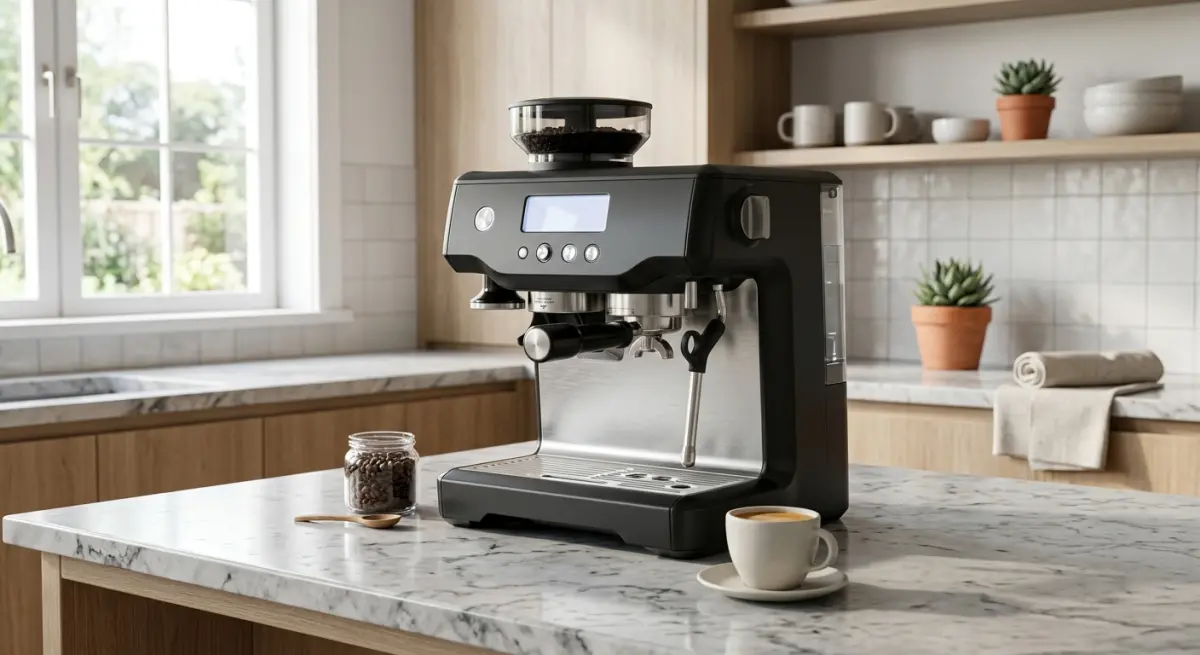
3D lifestyle images work differently. We build the product as a high-resolution 3D model — every surface detail, every material property — and then place it inside a 3D environment. That environment can be a complete interior scene, a styled shelf, an outdoor terrace, wherever the product belongs. Lighting, shadows, reflections, depth of field — all of it is simulated using physically accurate rendering engines like V-Ray, Arnold, or Corona. The final output is an image file. A JPEG or PNG that looks like a photograph, because it’s designed to replicate the physics of photography.
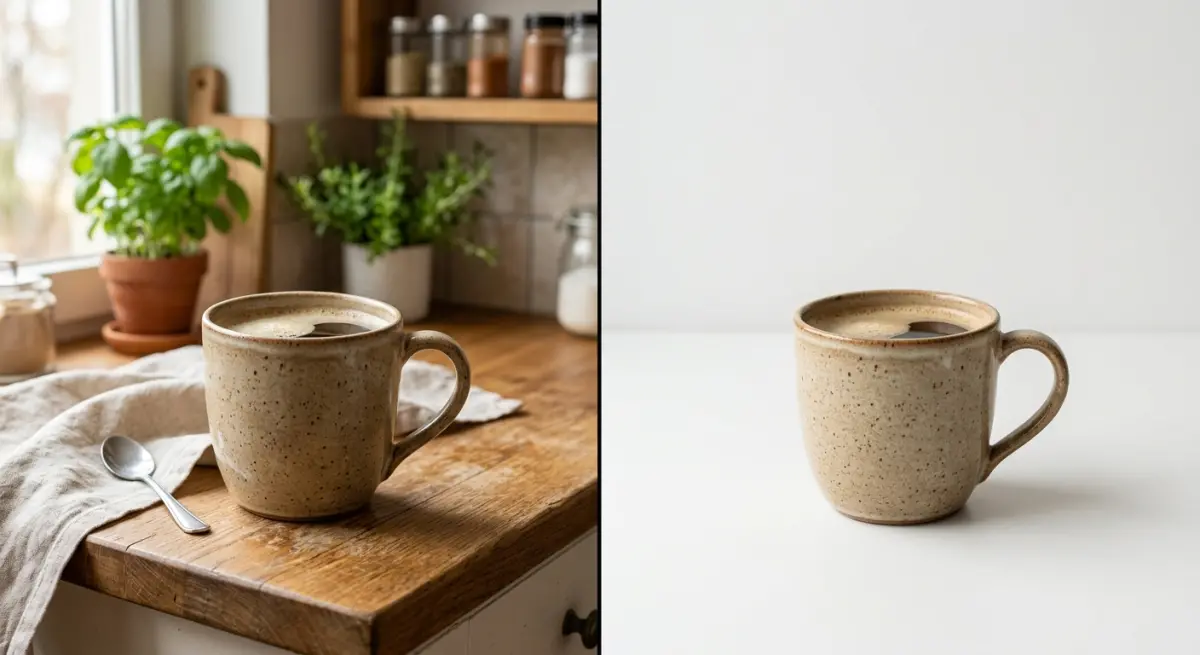
The key distinction from a simple product render is context. A product render isolates the object — white background, clean angles, technical precision. A lifestyle render puts it in a scene. Both matter. But for e-commerce, lifestyle imagery is what actually sells.
When Should You Use 3D Lifestyle Images Instead of Studio Photography?
This is where we have to be honest with clients: 3D isn’t always the answer. If you have one product, it’s already manufactured, and you need ten images this week, book a photographer. But here are the situations where 3D lifestyle rendering is clearly the smarter choice.
Pre-Launch and Pre-Production Stages
You’re launching a product that isn’t physically ready yet. Maybe it’s in tooling. Maybe you’re still finalizing the finish. You need website images, investor decks, launch-day content — and you have nothing to photograph. 3D solves this completely. We’ve rendered full product catalogs for clients before a single unit came off the production line. The images were live on the website on launch day.
Large Product Catalogs with Multiple Variants
This is probably the strongest use case. Imagine a furniture brand with one sofa frame that comes in fourteen fabric options. To photograph all fourteen, you’d need to physically manufacture fourteen sofas, style and shoot each one, and do it again for every season. In 3D, we build the model once. Changing the fabric is a material swap. We can generate all fourteen colorways in the same scene, same lighting, same composition. Consistency across a full catalog is extremely difficult to achieve in photography and trivially easy in 3D.
Tight Budget, High Visual Standards
Studio photography has costs that compound quickly — photographer fees, studio rental, set construction, props, stylists, post-processing, reshoots if something isn’t right. For a single hero image, photography might be more economical. For a full catalog? The math usually tips toward 3D rendering, especially when you factor in the ability to make changes without a reshoot.
Scenes That Are Physically Difficult or Expensive to Build
A client once needed their outdoor lounge furniture shot in a specific rooftop setting with a city skyline at golden hour. Building that set physically wasn’t an option. In 3D, we built the scene, controlled the exact angle of the light, chose the skyline we wanted, and had full creative control over every element. No location scouting. No weather dependencies.
Why 3D Lifestyle Images Outperform Studio Shots in Key Areas
This isn’t about saying one is universally better. It’s about being specific about where 3D wins.
Consistency Across a Full Catalog
One of the hardest things to achieve in product photography is consistency — same light quality, same shadow behavior, same white balance — across hundreds of SKUs shot on different days, sometimes in different studios. In 3D, the scene file is saved. Every product rendered in that file shares identical lighting conditions. This matters enormously for brand presentation. When your category page looks like everything was shot in the same space, it signals professionalism.
Infinite Revisions Without a Reshoot
In photography, if the client wants the lamp moved two feet to the left, you’re booking another shoot. In 3D, we move the lamp in the scene file and re-render. If a client’s brand director doesn’t like the wall color, we change it. If the product undergoes a last-minute design change — a different handle finish, a new logo placement — we update the 3D model. The flexibility is genuinely different in kind, not just degree.
Control Over Every Visual Variable
Photographers are skilled at working with light, but they’re ultimately working with physical constraints. In 3D, every light source is fully programmable. We can place a softbox precisely, control its temperature to the Kelvin, add bounce light exactly where it helps the product’s contours, eliminate any shadow we don’t want. For products where material communication is critical — a high-gloss lacquered surface, a brushed metal finish, a translucent resin — 3D lets us show those materials in their absolute best light, literally.
Scalability for Global Markets
If you’re selling in the US and also in the Middle East, the lifestyle context that resonates might differ — the interior style, the color palette, the surrounding objects. In 3D, we can create the same product in a different scene for each market. Same model, different environment, different cultural styling. Try doing that with a photo shoot economically.
What Clients Get Wrong About 3D Lifestyle Rendering
The biggest misconception we encounter is that 3D is a shortcut or a compromise. Some clients come to us expecting to save time by cutting corners. The reality is that high-quality 3D lifestyle images take real time to produce. Building a detailed 3D model of a complex product takes days. Constructing and lighting a full interior scene takes more time on top of that. The advantage isn’t speed — it’s the flexibility and repeatability you gain after the initial investment.
The second misconception is about realism. We still get clients who say, “I want something that looks 3D” — meaning stylized or obviously rendered. That’s a valid creative choice, but it’s not what converts buyers. When a lifestyle image looks real, buyers engage with it emotionally. They stop thinking about the image and start thinking about the product. That’s the goal.
The third issue is model quality. We’ve had clients provide 3D files from their engineering CAD software expecting us to render directly from those. CAD files are built for manufacturing, not visualization. They need to be rebuilt or heavily reworked for rendering purposes. This isn’t a problem — it’s just something to plan for in the project timeline and budget.
Finally, some clients underestimate how much the scene design matters. A mediocre lifestyle scene undermines even the most beautifully rendered product. The environment needs to be styled with the same care a set designer would bring to a physical shoot — furniture scale, prop selection, spatial composition, mood. This is where artistic skill matters as much as technical skill. A render is only as good as the scene it lives in.
A Practical Comparison: 3D Lifestyle vs. Studio Photography
| Factor | 3D Lifestyle Rendering | Studio Photography |
|---|---|---|
| Product must be manufactured | No | Yes |
| Multiple colorway handling | Easy material swap | Requires separate shoot per variant |
| Revision after delivery | Return to scene file, re-render | Reshoot required |
| Catalog consistency | Exact match across all renders | Difficult across multiple sessions |
| Scene environment control | Complete creative control | Limited to physical set |
| Best for large-scale catalogs | Yes | Expensive at scale |
| Organic, spontaneous feel | Requires skilled art direction | Natural advantage |
How to Brief a 3D Lifestyle Render Properly
If you decide to move forward with 3D lifestyle images for your product line, the quality of your brief determines the quality of the output. Here’s what good briefs include: reference images for the scene mood, clear information about the product’s target buyer and where they’d use it, any brand color or material guidelines that should inform the scene, the intended use (hero image, secondary image, social content), and the final output format and dimensions.
The more context you give us, the better the scene design will be. “A modern living room” is a starting point. “A minimalist living room targeting buyers aged 28-40 in urban apartments, with warm wood tones and muted colors” is something we can actually build from.
If you’re ready to explore professional 3D lifestyle rendering for your product line, our team at 360render.com works with e-commerce brands across furniture, consumer electronics, homeware, and personal care to produce catalog-ready imagery that performs. We’d be glad to walk through your specific product and what kind of scene would serve it best.
Frequently Asked Questions
What are 3D lifestyle images for e-commerce and how are they different from studio product shots?
3D lifestyle images are computer-generated visuals that place a product within a realistic, styled environment — like a living room, kitchen, or outdoor setting — created entirely using 3D rendering software without physical photography. Unlike traditional studio shots, which photograph the actual product against a neutral or simple background, 3D lifestyle images are built from scratch digitally, giving brands complete control over lighting, environment, and composition. This makes them especially useful for products that are difficult or expensive to photograph in real-world settings.
When should an e-commerce brand choose 3D lifestyle images over traditional photography?
3D lifestyle images are the better choice when products are not yet physically manufactured, when staging real-world environments would be too costly or logistically complex, or when a brand needs to produce dozens of scene variations quickly and at scale. They are also ideal for large furniture, home décor, or configurable products where showing multiple color and style options in context would require multiple expensive photoshoots. If speed to market, cost efficiency, and visual consistency across a catalog are priorities, 3D lifestyle rendering is often the smarter investment.
Do 3D lifestyle images actually convert better than traditional studio product photos?
Yes — multiple industry studies and brand case studies show that lifestyle imagery, including 3D-rendered versions, can increase conversion rates by 25–40% compared to plain white-background studio shots, because they help shoppers visualize the product in a real context. Customers who can see how a sofa fits in a styled living room or how a lamp looks on a nightstand are more confident in their purchase decision, which also reduces return rates. The quality of modern 3D rendering has reached a level where most consumers cannot distinguish it from real photography, making it just as trustworthy but far more flexible.
How much do 3D lifestyle images cost compared to hiring a photographer for a lifestyle shoot?
A professional lifestyle photoshoot — including location or set rental, photographer fees, props, models, and post-production — can easily cost between $2,000 and $10,000 or more per session, often covering only a handful of products or scenes. High-quality 3D lifestyle renders typically range from $150 to $800 per image depending on complexity, and once a 3D model is built, creating additional scene variations costs a fraction of the original price. Over a full product catalog, brands that switch to 3D lifestyle imagery often report 40–70% savings in content production costs.
Are 3D lifestyle images good enough quality to use on Amazon, Shopify, and other major e-commerce platforms?
Yes, photorealistic 3D lifestyle images meet and often exceed the quality standards required by major e-commerce platforms including Amazon, Shopify, Walmart Marketplace, and Wayfair, as long as they are rendered at the required resolution — typically 1500×1500 pixels or higher. Many top brands and retailers already use 3D-rendered images across their product listings without disclosing that they are CGI, because modern rendering technology produces results indistinguishable from real photography. The key is working with experienced 3D artists who understand product detailing, realistic lighting, and platform-specific image guidelines.