If you sell furniture, design interiors, or manufacture upholstered goods, you already know how hard it is to present your product well. Photography is expensive, time-consuming, and inflexible. A single white-background product photo might cost you a full day of shooting, renting props, hiring a stylist — and the moment a fabric colorway changes, you’re back to square one. That’s exactly why so many furniture brands, e-commerce sellers, and interior designers have shifted to 3D furniture rendering services. Understanding what to expect, what it costs, and how to choose the right studio is genuinely important before you commit a budget and hand over your design files. Get it right and you’ll have a visual pipeline that scales. Get it wrong and you’ll spend weeks in revision loops, wondering why the renders look nothing like the brief.
In our studio, we work with furniture clients at very different stages — some are small D2C brands launching their first collection, others are large manufacturers who need hundreds of SKU images rendered for an e-commerce catalog. The needs are different but the core process is the same. A good furniture render starts with clean geometry, accurate materials, thoughtful lighting, and a staging environment that tells the product’s story. None of those things happen by accident, and none of them are “quick jobs.” When a client understands the process from the start, projects move faster, revisions drop, and the final output is exactly what the brief intended.
What 3D Furniture Rendering Actually Involves
Let’s be specific about what you’re buying when you commission furniture renders. A finished image is the last 5% of the job. Everything before that is invisible but critical.
The process typically starts with 3D modeling. If you have an existing CAD file, a DWG, or a manufacturer’s 3D model, we can work from that. If you only have a sketch, technical drawing, or reference photos, the model has to be built from scratch. This takes time — a well-constructed sofa with proper edge loops, stitch detailing, cushion displacement, and leg geometry can take anywhere from half a day to two full days to build correctly. Rushing the model always costs you in the rendering stage because bad geometry shows up in the final image.
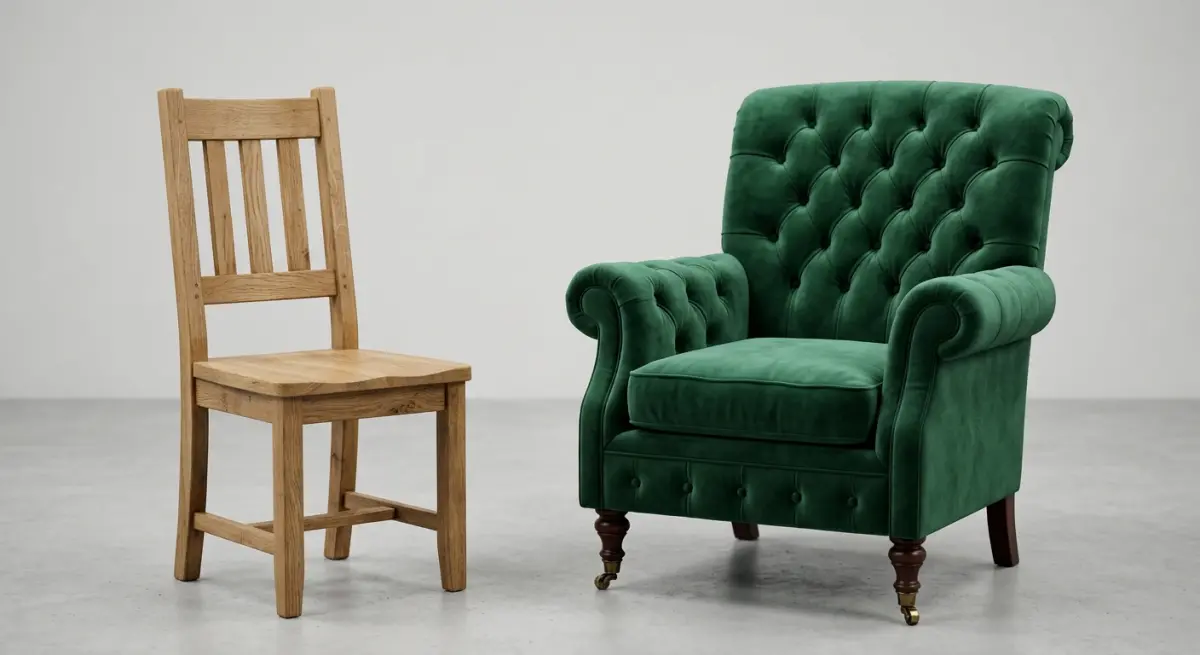
After modeling comes texturing and material setup. For furniture, this is where most of the realism lives. Fabric, leather, wood grain, lacquer, brushed metal — each material has its own physical behavior. A linen fabric scatters light differently than a velvet. A matte oak finish behaves completely differently from a high-gloss lacquered panel. We use physically based rendering (PBR) materials to recreate these behaviors accurately, which means building or sourcing texture maps for color, roughness, normal displacement, and sometimes subsurface scattering for certain materials like translucent resins or stone.
Then comes scene setup and lighting — deciding whether the piece lives in a lifestyle room set, a neutral studio environment, or a specific architectural context. Finally, rendering and post-production bring everything together. You can explore a broader breakdown of this at our 3D product rendering services page, which covers the full workflow in more detail.
Types of Furniture Renders You Can Commission
Not all furniture renders serve the same purpose. Understanding the types helps you brief correctly and budget accurately.
- White-background / studio renders: Clean, e-commerce-ready images on white or neutral grey. These are catalog staples — think Amazon listings, Shopify product pages, or print brochures. They’re relatively fast to produce because there’s no environment to build or light.
- Lifestyle renders: The product is placed in a styled interior environment — a living room, bedroom, office. These communicate the product in context and are extremely effective for brand campaigns, lookbooks, and social media. They take longer because the scene itself has to be designed and lit.
- 360° spin renders / turntable animations: A rotating view of the product, typically used on product detail pages to let customers inspect the piece from every angle. These require rendering the product from many camera positions — usually 24 to 36 frames for a smooth loop.
- Configurator-ready renders: If you sell furniture with multiple fabric options, wood finishes, or leg styles, you may need the same model rendered across dozens of material combinations. This requires a very organized material-swap pipeline and is where 3D rendering really outperforms photography on ROI.
- Interior scene renders: A full room composition where furniture is part of a larger interior design story. This is common for interior designers presenting proposals to clients. Our 3D interior rendering services cover this format specifically.
What It Actually Costs — And Why Pricing Varies So Much
This is where most clients are understandably confused, because pricing for furniture renders varies enormously across studios. A rough white-background product render from a freelancer might cost very little. A fully styled lifestyle render from a senior studio team can cost significantly more. Neither price is wrong — they reflect different scope, quality levels, and deliverables.
Here’s what drives the cost:
| Factor | Lower Cost | Higher Cost |
|---|---|---|
| Model complexity | Simple geometry (cube-like forms, minimal detail) | Tufted upholstery, carved wood, intricate metal frames |
| Scene type | White background / studio environment | Full lifestyle room set, custom architecture |
| Number of variants | Single finish, single camera angle | Multiple colorways, multiple angles, configurator set |
| Revision rounds | Tight brief, fast sign-off | Open-ended brief, many stakeholders, iterative feedback |
| Resolution & output format | Web-res JPEG | Print-ready TIF, layered PSD, multiple crop ratios |
| Timeline | Standard turnaround | Rush delivery |
One thing we always tell new clients: the model-building stage is often the largest cost in the first project. If you provide clean, usable 3D files, you save a significant amount of time. If we build the model for you, that asset lives in your library forever — every future render from that model is faster and cheaper. Think of it as a one-time production cost that pays back over the product’s commercial life.
What Good Studios Do Differently
There are a lot of 3D render providers in the market. The quality gap between them is real and it matters. Here’s what separates a studio worth working with from one that will frustrate you.
They ask the right questions upfront. A good studio will want to know: What surfaces need to be accurate versus stylized? Is this for print or screen? Will you need future renders from this model? Do you have real-world fabric or finish samples we should reference? Studios that skip this discovery phase almost always produce generic results.
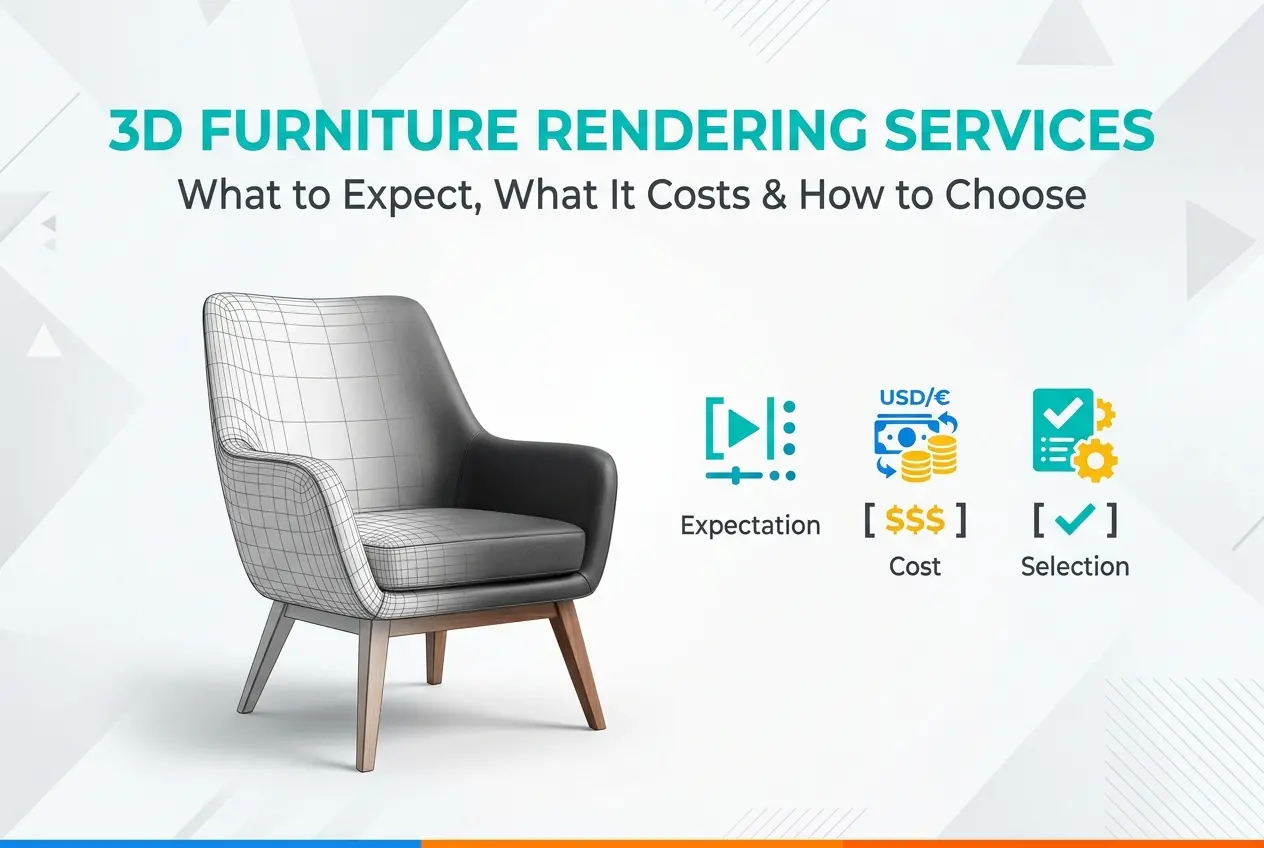
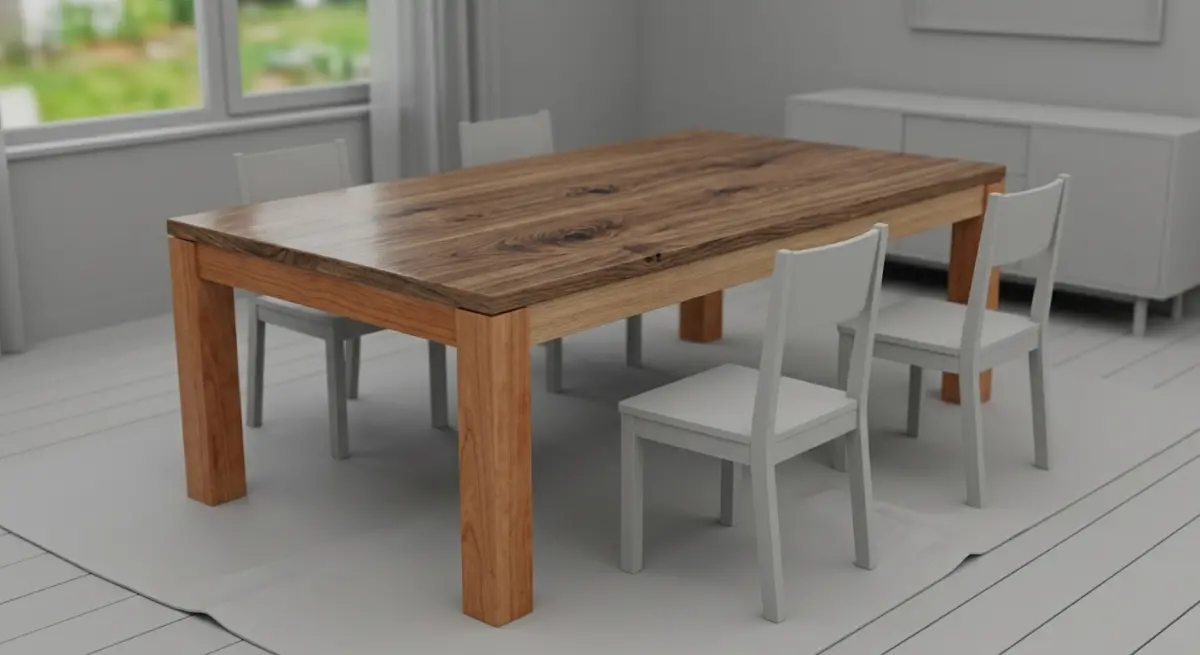
They deliver a clay or wireframe preview before final rendering. This lets you verify the model geometry before materials and lighting are added. Catching a proportion error at this stage costs nothing. Catching it after a full render has been completed costs time and money.
They have a clear revision policy. Revisions are normal and expected. What matters is how they’re handled — are they included in the quote up to a reasonable limit? Is the process documented? Studios that have no clear revision terms often become expensive very quickly or just become adversarial after two rounds of feedback.
Their portfolio shows range in material quality. Look specifically at how they render fabric, leather, and wood. These are the hardest materials to do well in furniture rendering. If every portfolio piece looks plasticky or overly glossy, the team doesn’t have strong material knowledge regardless of how clean the geometry is.
Common Mistakes Clients Make — And How to Avoid Them
We’ve seen the same pain points repeat across clients. The good news is they’re all avoidable.
Providing only inspiration images as a brief. Mood boards are a starting point, not a specification. The brief needs to include actual product dimensions, material spec sheets (or physical samples if possible), and explicit notes on which references are structural versus which are only about mood.
Assuming existing CAD files are render-ready. Engineering CAD files built for manufacturing (SolidWorks, AutoCAD, Rhino) are often extremely dense in polygon count and not optimized for rendering. They frequently need retopology before they can be used in a render engine efficiently. This is not a failing of the file — it’s just a different tool built for a different purpose.
Leaving material selection too open. “Something warm and neutral” will mean different things to different people. If you have a specific fabric in your line, send us a sample or a hi-res scan of the texture. The more concrete the reference, the more accurate the output.
Comparing render studios purely on price. The cheapest quote usually means a freelancer who will rush the model, use generic stock materials, and deliver results that need heavy revision. We’ve had clients come to us after two or three failed attempts elsewhere — the total cost by that point far exceeded what a first-rate studio would have charged. If you’re investing in this kind of visual content, it’s worth doing once and doing properly. You can reach us through our contact page to discuss what your specific project needs.
How to Choose the Right Studio for Furniture Rendering
When evaluating studios for 3D furniture rendering services, run through these checkpoints before committing:
- Review their furniture-specific portfolio. Product renders for electronics or packaged goods require different skills than furniture. Find work that shows upholstery, wood, and metal handled well.
- Ask about their modeling pipeline. Do they build models in-house or outsource? In-house control means faster feedback loops and better quality consistency.
- Understand their file handover policy. Do you own the 3D model files at the end? Can you take them to another studio later? Some studios retain model ownership — this can lock you in.
- Ask for a small test render. For any significant project, a paid test render on one product before committing to the full catalog is a smart investment. It tells you whether their style and process fit your needs before there’s too much at stake.
- Check their communication responsiveness. Render projects are collaborative. If it takes three days to get a reply to a brief question, that’s a preview of what revisions will feel like.
The right studio for 3D furniture rendering services won’t just produce good images — they’ll understand your product, ask smart questions, and make the process efficient enough that you’d use them for every new collection launch. That relationship is worth more than the lowest price on a single project.
If you’re planning a furniture catalog, a product launch, or need renders for an e-commerce platform and want to talk through scope and approach, get in touch with our team at 360render.com. We’re happy to review your files, discuss what the project involves, and give you a clear picture of timeline and cost before anything is committed.
Frequently Asked Questions
How much do 3D furniture rendering services typically cost?
3D furniture rendering services generally range from $150 to $1,500+ per image, depending on complexity, level of realism, turnaround time, and the studio's location and experience. Simple product shots on white backgrounds cost less, while photorealistic lifestyle scenes with custom environments and lighting command premium prices. Most studios offer package deals for bulk orders, which can significantly reduce the per-image cost for furniture manufacturers or retailers with large catalogs.
How long does it take to get a 3D furniture render completed?
A standard 3D furniture render typically takes 3 to 7 business days from the time all design files and specifications are submitted to the studio. Rush delivery options are usually available for an additional fee, often cutting turnaround to 24 to 48 hours. Complex projects involving multiple angles, custom room scenes, or animation can extend timelines to two weeks or more, so it's important to plan ahead when working with product launch deadlines.
What files or information do I need to provide to a 3D rendering studio for furniture?
To produce accurate furniture renders, studios typically require technical drawings or CAD files, exact dimensions, material and fabric swatches or specification sheets, hardware details, and reference photos of similar pieces or desired styles. The more detailed the information you provide upfront, the fewer revision rounds will be needed and the faster the project will be completed. Some studios also accept physical samples or mood boards to help match the intended aesthetic and brand identity of your product.
How do I choose the right 3D furniture rendering studio for my project?
When evaluating studios, review their portfolio specifically for furniture rendering experience, paying close attention to material realism, lighting quality, and attention to detail in pieces similar to yours. Check client testimonials, ask about their revision policy, and confirm they have experience with your target output formats such as web-optimized images, print-ready files, or interactive 360-degree views. Requesting a small paid test render before committing to a large project is a reliable way to assess quality, communication, and turnaround time firsthand.
Are 3D furniture renders good enough to replace traditional product photography?
Modern 3D furniture renders have reached a level of photorealism that makes them virtually indistinguishable from photography, and they are increasingly used as the primary visual asset by major furniture brands and e-commerce retailers. Unlike traditional photography, 3D renders allow you to showcase unlimited color and material variations, custom room settings, and precise lighting without the cost of physical prototypes or photography studios. For new product launches or catalog updates, 3D rendering is often faster, more cost-effective, and more flexible than organizing and executing a full photoshoot.