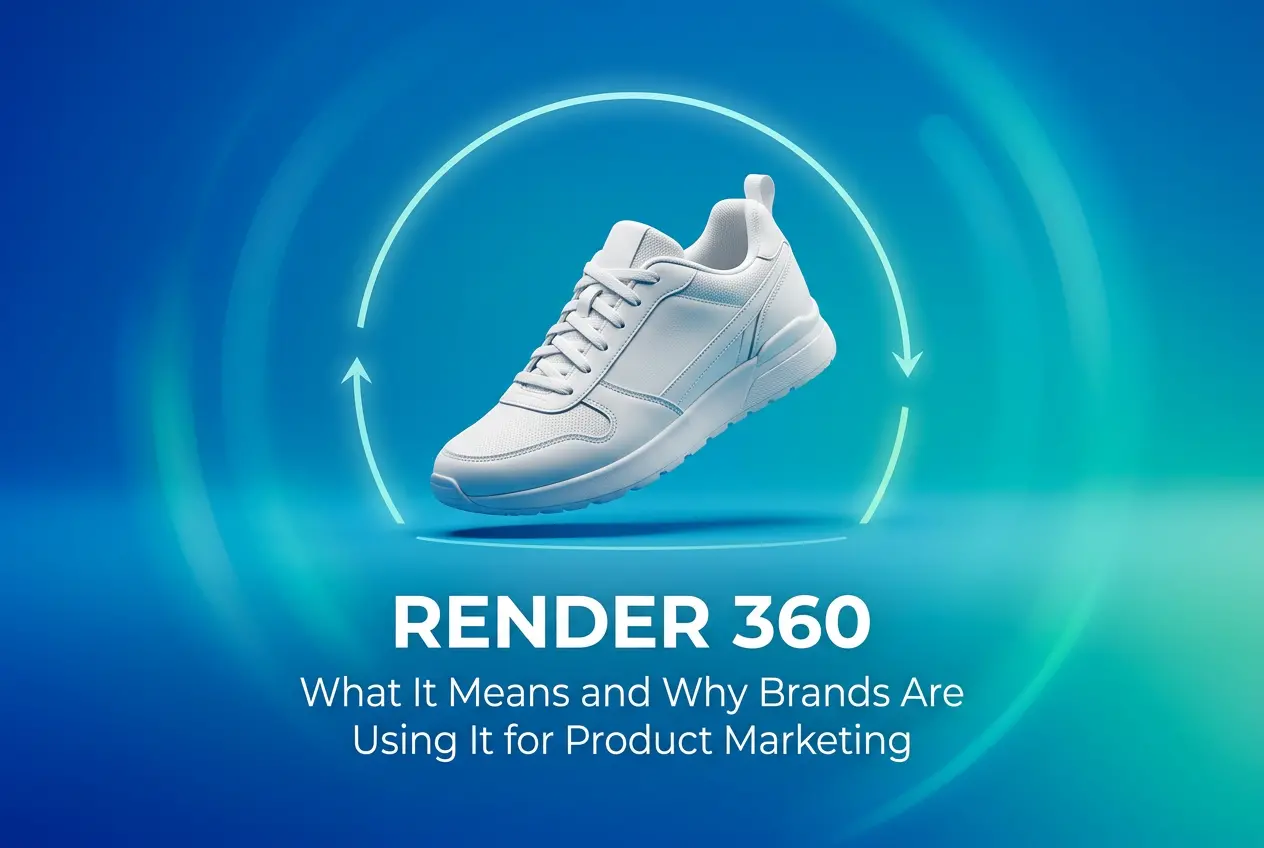
If you’ve been shopping for furniture, electronics, or consumer goods online lately, you’ve probably encountered it without even realizing it. You hover over a product image, and suddenly you can spin it — left, right, upside down, all the way around. That’s Render 360: What It Means and Why Brands Are Using It for Product Marketing in its most straightforward form. It’s a technique that turns a static product image into an interactive, fully rotatable visual experience. And brands across industries are adopting it fast, because the way people shop online has changed dramatically, and static photography simply can’t keep up.
The concept sounds technical, but the result is surprisingly human. When a customer can spin a product, examine the stitching on a leather bag, check the port layout on a laptop, or see how a chair looks from every angle, they feel more confident about buying. That confidence is the whole point. This post breaks down what 360 rendering actually is, how it differs from traditional product photography, and why so many brands are building it into their marketing strategy.
Whether you’re a product manager, a marketing director, or a brand owner trying to stand out in a crowded e-commerce landscape, understanding this technology is worth your time. Let’s get into it.
Render 360: What It Means and Why Brands Are Using It for Product Marketing
At its core, a 360 render is a series of computer-generated images — typically rendered from multiple angles around a product — that are stitched together to create a smooth, interactive spin. Unlike a single hero shot or even a multi-angle photo set, a 360 render gives viewers complete visual control. They decide what angle to look from. They can pause, zoom, and examine details at their own pace.
The “render” part is key. These aren’t photographs taken in a studio. They’re created using 3D modeling software, where a digital version of the product is built from scratch (or modeled from technical drawings and CAD files), and then rendered — meaning a computer calculates how light, shadow, reflection, and texture interact with that object. The result looks just as real as a photo, sometimes more precise, because every detail is controlled.
The difference between a rendered 360 and a photographed 360 is also worth understanding. You can create a 360 spin using a turntable and a camera — that’s done in a photography studio. But rendering it in 3D gives brands much more flexibility. Products don’t need to be physically produced first. Colors and materials can be swapped in seconds. You can render a product before it even exists. This is why brands working on new product launches have moved heavily toward 3D rendering pipelines.
How 360 Product Rendering Actually Works
The process starts with a 3D model. If a brand has existing CAD files from engineering or product design, those are often the starting point. If not, a 3D artist builds the model from scratch using reference images, technical specs, or product samples. The level of detail matters enormously here — every surface, edge, and material needs to be modeled accurately.
Once the model is built, it goes through a texturing and shading phase. This is where materials are applied — metal gets its reflectivity, fabric gets its weave, plastic gets its gloss level. A lighting environment is set up to mimic real-world conditions, whether that’s a clean studio look or a lifestyle setting with ambient light.
Then comes the actual rendering. The software calculates images at every degree of rotation — sometimes 24 frames, sometimes 72, sometimes more depending on how smooth the spin needs to be. Each frame is rendered individually, then exported and combined into an interactive viewer that can be embedded on a website or within an app.
The final product is a web-ready experience that customers can interact with directly on a product page. Brands like furniture companies and automotive brands have been using this approach for years, and it’s steadily spreading into fashion, electronics, packaging, and luxury goods.
If you want to see what this looks like in practice, exploring 3D product rendering services is a good place to start.
Why Static Images Aren’t Enough Anymore
Think about the last time you bought something significant online — a piece of furniture, a pair of shoes, a piece of tech. You probably looked at every image available, read every review, and still had questions. What does the back look like? How deep is that shelf? How does the zipper sit?
Static images, even excellent ones, create gaps. Customers fill those gaps with assumptions, and assumptions lead to returns, negative reviews, and lost trust. A 360 render addresses this directly. It doesn’t replace the buying decision — it supports it. Customers who can fully inspect a product before purchasing tend to have clearer expectations of what they’re getting.
This is especially important for high-consideration products. When someone is spending a meaningful amount on a piece of furniture, a camera, or a pair of designer shoes, they want to feel certain. Giving them a way to examine the product from every angle reduces hesitation without requiring them to visit a physical store.
There’s also a competitive angle here. If your competitor’s product page has a 360 interactive viewer and yours has three flat photos, which one feels more premium? Which brand seems more invested in the customer experience? The gap in perceived quality is real, even if the products themselves are identical.
The Practical Advantages for Product Marketing Teams
Marketing teams love 360 renders for reasons that go beyond aesthetics. Here are some of the most practical advantages that come up again and again when brands make the switch.
Shoot Before You Manufacture
One of the most practical benefits is the ability to create marketing assets before a product is physically available. For companies launching new products, the timeline between final design approval and production can stretch for months. With 3D rendering, you don’t have to wait. You can produce a full 360 spin, lifestyle shots, and detail images based entirely on the 3D model, long before a physical unit exists.
This means campaign assets, e-commerce listings, and pre-launch marketing materials can all be ready to go on day one of product availability. For teams managing tight launch calendars, this is genuinely valuable.
Infinite Variants Without Infinite Shoots
If you offer a product in twelve colorways, traditional photography means twelve separate shoots. With 3D rendering, you build the model once and swap materials digitally. The same 360 spin can be produced in every color option at a fraction of the cost of restaging the shoot each time.
For brands in fashion, automotive accessories, consumer electronics, and home goods — where color and material variants are a major part of the product offering — this is a significant operational advantage. 3D rendering for furniture is one area where this capability has been especially well-adopted, since furniture lines often come in multiple fabrics, finishes, and configurations.
Content That Works Across Channels
A well-produced 360 render doesn’t just live on a product page. The same 3D assets can generate still images for social media, animated GIFs, exploded views for technical content, AR experiences, and even video walkthroughs. One set of assets, many uses. For content teams managing complex multi-channel campaigns, this kind of flexibility makes production pipelines much more efficient.
Industries Using 360 Rendering Most Effectively
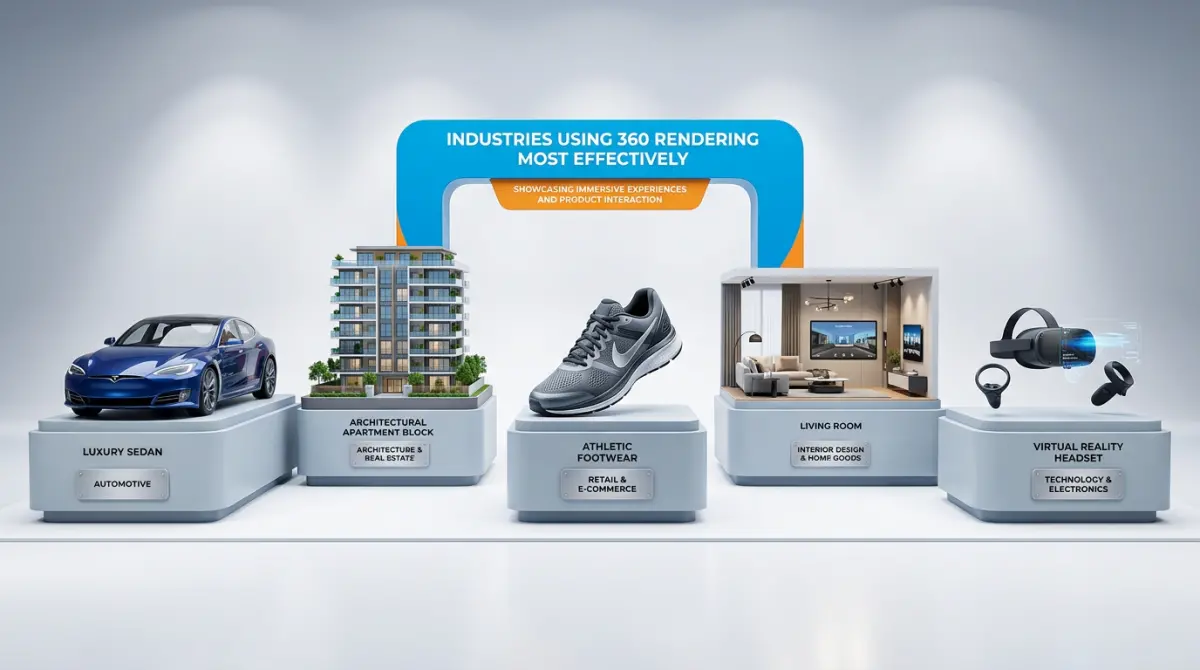
While the technology works for almost any physical product, certain industries have embraced it particularly hard.
Furniture and home decor brands were early adopters. The purchase decision for a sofa or dining table is high-stakes, and customers want to see every angle, every fabric option, every dimension. 360 rendering addresses all of that.
Consumer electronics companies use it to highlight design details — port placement, button layout, material quality — that photographs sometimes flatten or obscure. A 360 spin of a pair of headphones or a laptop communicates premium engineering in a way that a single beauty shot can’t.
Jewelry and accessories brands rely on 360 rendering to show how pieces catch light from different angles, something that’s notoriously difficult to capture consistently in photography. Rendering gives complete control over how light interacts with stones, metals, and surfaces.
Automotive and industrial products have used 3D visualization for years, and 360 rendering extends that into customer-facing marketing naturally.
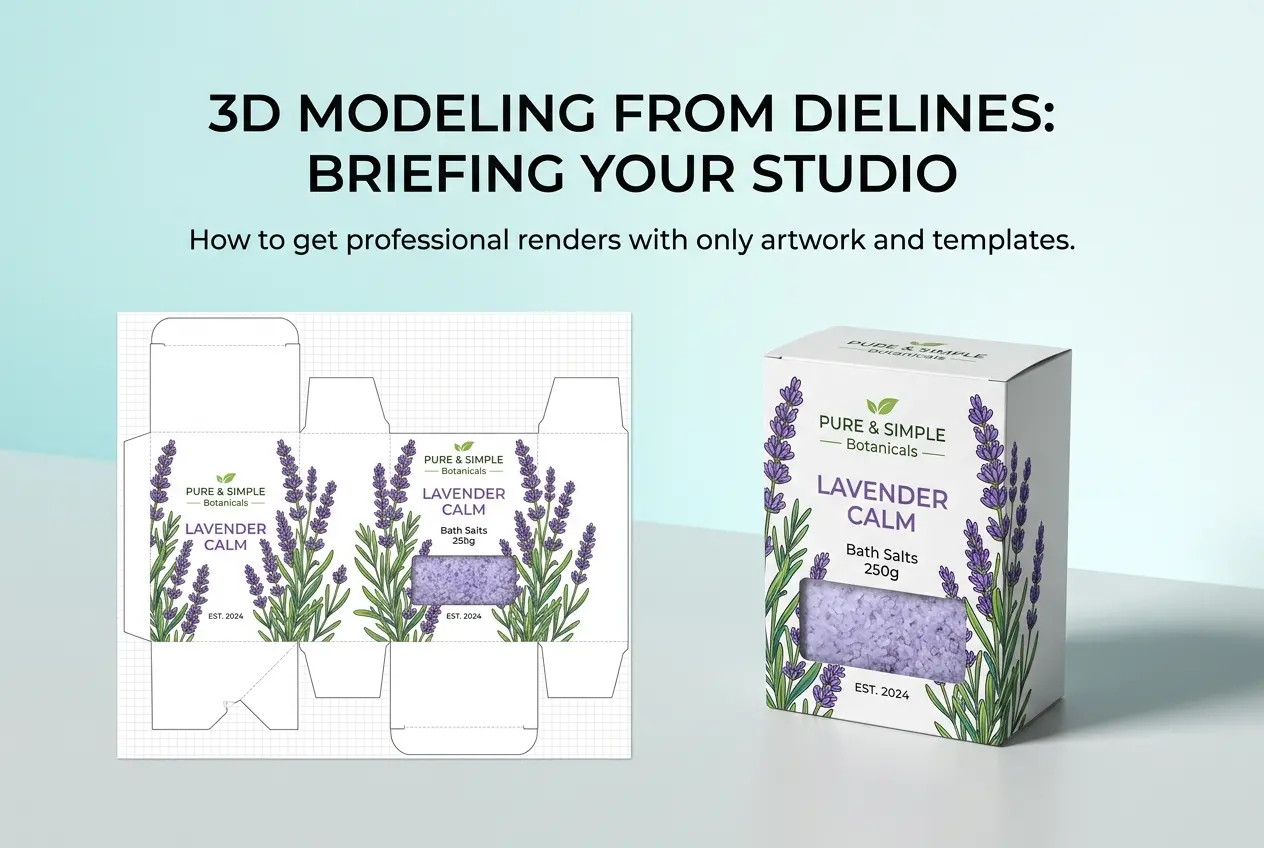
Even 3D rendering for packaging has become popular among brands that want to present new packaging designs for approval or marketing before committing to production runs.
Tips for Getting the Most Out of 360 Rendering
If you’re considering 360 rendering for your products, a few practical points are worth keeping in mind.
Start with accurate reference material. The quality of your 360 render depends heavily on the quality of information the 3D artist has to work with. CAD files, technical drawings, physical samples, and detailed spec sheets all help. The more accurate the input, the more accurate the output.
Think about frame count early. A 24-frame spin feels noticeably choppier than a 72-frame spin. Talk to your rendering studio about what resolution and frame count are appropriate for your use case and the devices your audience uses most.
Plan your asset usage before you start. If you need stills for social, a hero shot for your homepage, and a 360 spin for the product page, tell your studio upfront. The same 3D model can generate all of these, but planning it in advance keeps the workflow clean.
Match your lighting to your brand aesthetic. Studio-clean lighting looks great for tech products. Warmer, lifestyle-style lighting works better for home goods and fashion. The lighting environment in a render is fully controllable, so use that to your advantage.
Don’t forget mobile. A large portion of online shopping happens on phones. Make sure the 360 viewer you’re using is optimized for touch gestures and loads quickly on mobile connections.
Conclusion: Is 360 Rendering Right for Your Brand?
If you sell physical products online and you’re still relying entirely on flat photography, it’s worth asking whether that approach is still serving your customers as well as it could. Render 360: What It Means and Why Brands Are Using It for Product Marketing really comes down to one thing: giving buyers the information they need to feel confident. That’s good for conversion, good for returns, and good for your brand reputation.
The technology has matured to the point where it’s accessible to brands well beyond the Fortune 500. Whether you’re a mid-sized DTC brand or a global retailer, the workflow is proven, the results are measurable, and the production timelines are reasonable.
If you’re curious about what 360 rendering could look like for your specific products, the team at 360render.com is ready to talk through your project. A quick conversation about your product line and your marketing goals is usually all it takes to figure out whether this is the right move — and how to do it well.
Frequently Asked Questions
What is a 360 product render and how does it work?
A 360 product render is a digitally created animation or interactive sequence that shows a product rotating a full 360 degrees, giving viewers a complete visual perspective from every angle. It works by using 3D modeling software to build a photorealistic digital version of the product, then rendering multiple frames or an interactive viewer that responds to user input. This eliminates the need for physical product photography while delivering a more immersive and detailed customer experience.
Why are brands switching from traditional product photography to 360 renders?
Brands are switching because 360 renders offer greater flexibility, lower long-term costs, and the ability to showcase products before they are physically manufactured. Unlike traditional photography, 360 renders allow instant updates to colors, materials, or configurations without reshooting, making them ideal for product variants and seasonal campaigns. They also produce consistent, studio-quality visuals that perform exceptionally well across e-commerce platforms and digital advertising.
How does 360 product rendering improve conversion rates for e-commerce?
Studies and platform data consistently show that interactive 360 product views significantly reduce purchase hesitation by giving shoppers the confidence of seeing a product from every angle before buying. When customers can virtually inspect a product as if holding it in their hands, they experience fewer doubts about size, design, and quality, which directly lowers return rates and increases completed purchases. Retailers using 360 renders have reported conversion rate increases ranging from 20 to over 40 percent compared to standard static product images.
What types of products benefit most from 360 render marketing?
Products with complex shapes, intricate detailing, or multiple configurable options benefit most from 360 renders, including consumer electronics, footwear, furniture, automotive parts, and luxury goods. These categories require customers to evaluate design quality and functionality from multiple perspectives before committing to a purchase, making the full-rotation view especially persuasive. Additionally, products that come in numerous color or finish variants gain a major advantage because each variation can be rendered digitally without producing separate physical samples.
How much does it cost to create a 360 product render compared to a traditional photo shoot?
The upfront cost of a 360 product render can range from a few hundred to several thousand dollars depending on product complexity and the level of photorealism required, which may seem comparable to or slightly higher than a professional photo shoot. However, the long-term value is significantly greater because the 3D model can be reused indefinitely for future campaigns, color updates, packaging changes, and additional marketing assets without repeating the full production cost. When factoring in multiple uses over time, most brands find that 360 rendering delivers a much stronger return on investment than traditional photography.